
How to Kick Bad Habits: Five Steps for Everyday Habit Loops


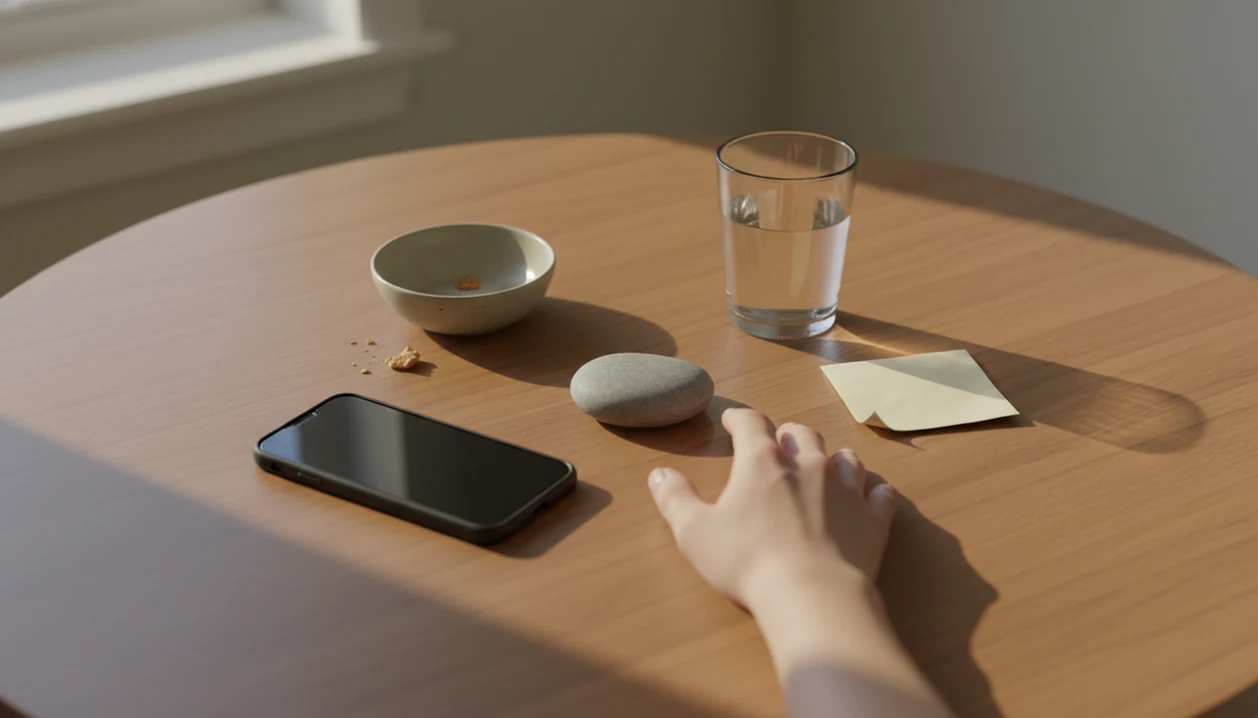
To kick bad habits, identify the cue, pause before the automatic response, and replace the behavior with a small action that offers a similar reward. Kicking a habit means interrupting a cue-behavior-reward loop and repeating a healthier response until it becomes easier and more automatic. The goal is not perfect willpower. It is a plan you can use when the urge returns.
Start with one habit, one trigger, and one replacement. For checking your phone in bed, that might mean putting it out of reach and taking a short breathing break instead. Mindfulness helps you notice the urge before acting, not force it away. Plan for slip-ups, too: a lapse is a reason to adjust and resume, not abandon the whole plan.
The essentials
- Start with one habit, one trigger, and one replacement behavior.
- Use mindfulness to notice the urge before acting on it, not to force the urge away.
- Plan for slip-ups with self-compassion so one lapse does not become a full reset.
Identify the cue, behavior, and reward
Kicking a bad habit means interrupting a cue-behavior-reward loop and practicing a healthier replacement until it becomes easier and more automatic. In everyday language, a cue starts the pattern, the behavior follows, and the reward teaches your brain, “Do that again.”
The cue might be boredom after dinner, a phone within reach, or tension before sending a message. The behavior could be scrolling, snacking, nail biting, or avoiding a task. The reward may be relief, distraction, stimulation, or a short break.
Habit change is usually more about awareness, replacement, and repetition than raw willpower. Mindfulness helps because it lets you notice the urge before your body has already moved. A practical next step might be feeling your feet on tile, taking one breath, and choosing the smaller replacement.
Bad Habit Loops In The Brain And Body
Bad habits work through a repeating loop: cue, urge, behavior, reward, and repetition. The brain learns efficiency. If a behavior reduces discomfort quickly, it may become the default response, even when it creates problems later. Learning how your brain processes information can help you question automatic thoughts and think more clearly before acting.
Stress, fatigue, and easy access make the loop stronger. A tired brain is more likely to choose the familiar route. Leaving a snack on the counter, a phone unlocked, or a browser tab open makes the familiar behavior easier to repeat. That matters. You can also notice old habits of thinking that make familiar reactions feel like your only option.
Urges are temporary body-mind events, not commands. You may feel restlessness in your chest, pressure in your jaw, or a quick reach toward the phone. Mindfulness creates a small space between cue and response. Practicing mindfulness and beginner meditation can help you pause and choose a response, but neither provides instant self-control or a cure for every habit.
Five principles for changing one habit at a time
Before you build a plan, keep these five facts in view:
- Bad habits usually follow a cue-behavior-reward loop, so changing the trigger and response matters more than blaming yourself.
- A trigger is useful information only when you also choose a replacement response.
- Mindfulness supports noticing urges without immediately obeying them.
- Small changes are more sustainable than extreme plans that depend on a perfect week.
- Slip-ups are normal, and harsh self-criticism can make restarting harder.
For beginners, one simple way to try it is to write down the cue after the habit happens. Not a long journal. Just time, place, feeling, behavior, and reward. “10:40 p.m., couch, tired, scrolling, numb for a while” is enough.
A 2021 meta-analysis of 136 randomized controlled trials found mindfulness-based interventions improved anxiety, depression, and stress outcomes compared with controls (PubMed research). That evidence supports mindfulness as attention practice, but not as a guaranteed fix for every behavior.
Before You Start Changing A Bad Habit
Before you start, choose a habit that is safe to practice with on your own and small enough to repeat. The right starting point is an everyday loop, not a behavior that needs medical or mental health support.
- Choose one low-risk target. Pick a habit like late-night scrolling, reactive checking, procrastination, or casual stress snacking. Do not use a self-guided plan for addiction, self-harm, withdrawal risk, eating disorder symptoms, or behavior that feels dangerous or uncontrollable.
- Write the loop clearly. Note the cue, setting, feeling, behavior, and reward in one plain line. “After work, kitchen, tense, snack, relief” gives you something useful to change.
- Remove one friction point. Put the phone across the room, close the tab, move the snack, or set the task materials out before you depend on willpower.
- Pick a tiny replacement. Choose something you can do in under two minutes, such as standing up, drinking water, stretching, or taking three slow breaths. For an outdoor replacement, try mindful hiking to practice noticing your surroundings while moving at a comfortable pace.
- Decide your stop signs. Pause the plan and seek professional help if the habit causes harm, danger, withdrawal, major impairment, or loss of control.
Five-Step Bad Habit Plan
Use this five-step plan for one habit over the next week. For most everyday habits, a specific replacement is easier than “just stop” because the brain still expects a response when the cue appears.
1. Pick one habit
Choose one behavior to work on for seven days. Keep it narrow: “checking my phone in bed” works better than “use my phone less.”
2. Track the trigger
Log the setting, emotion, time, and reward. If the mind wanders to a grocery list while you write, notice it and return.
3. Choose a replacement
Pick a tiny action that meets a similar need. Try standing up, drinking water, stretching, or doing a 5-minute mindfulness practice.
4. Practice the pause
Take three breaths before the old behavior. The pause before answering a message is often where the choice appears.
5. Reset after slips
Review slips without shame. Ask, “What cue did I miss, and what replacement needs to be easier?”
Write a backup plan for difficult days
Give your replacement a backup version before you need it. Write two sentences: “When this cue appears, I will do this small action” and “If that action is not possible, I will do this instead.” For procrastination, the first action could be opening the document and writing one sentence; the backup could be writing a brief note on paper. A review of physical-activity planning studies found that plans were more likely to help when they addressed obstacles. Applying that idea to other everyday habits is a practical adaptation, not proof of equal results.
Add a recovery rule: after a missed opportunity, resume at the next planned cue rather than waiting until Monday. In a 12-week habit-formation study, missing one occasion did not materially disrupt progress, although inconsistent repetition reduced it. The study followed new eating, drinking, and activity behaviors, not every kind of unwanted habit. Use the finding to support a steady restart, not to promise that any replacement will become automatic on a fixed schedule.
Everyday habits you can work on, and signs to seek help
This guide fits everyday habits, not high-risk conditions. It is best used for patterns where you still have some choice and can safely experiment with cues, access, and replacement behaviors.
| Fit | Examples | Practical note |
|---|---|---|
| Best for everyday loops | Scrolling, procrastination, stress snacking, nail biting, reactive checking | Start small and repeat the same replacement. |
| Best for beginners | People wanting a secular mindfulness-based structure | A daily mindfulness routine can make the pause easier to remember. |
| Not ideal for clinical risk | Addiction, eating disorders, self-harm, severe compulsive behavior | Do not use this as a substitute for care. |
| Get support when | There is danger, withdrawal, major impairment, or loss of control | Clinicians typically recommend professional assessment when behavior causes harm or feels uncontrollable. |
Tiny plans help ordinary loops. Serious harm needs more support.
Mindfulness Tips For Urges, Cravings, And Slip-Ups
Can mindfulness help with urges and cravings? Yes, it can help you notice the urge, name it, locate it in the body, breathe with it, and wait before acting.
This is often called urge surfing. You are not suppressing the craving. You are watching it rise, shift, and fade enough to choose your next move. Ribs widening under a sweater can become the cue to stay with one breath instead of reaching automatically.
After a lapse, self-compassion is not an excuse. It is a restart skill. Say what happened, remove one barrier, and repeat the plan. A 2020 review reported that mindfulness-based programs are associated with reductions in rumination and self-critical thinking, two patterns that can keep people stuck after a lapse (NIH research).
Mindful.net is a Mindfulness Practices App that teaches short mindfulness practices and meditation techniques for beginners and everyday life.
Common Bad Habit Mistakes That Keep Loops Alive
These common mistakes keep habit loops alive even when motivation is high:
- The everything plan: Changing five habits at once usually creates too much friction. Pick one loop and make it visible.
- The empty space problem: Removing the old behavior without a replacement leaves the brain searching for the same reward.
- The motivation bet: Motivation changes with sleep, stress, and mood. Design the room, cue, and replacement so the plan does not depend on an ideal week.
- The shame spiral: Using guilt after a slip often drains the energy needed to restart calmly. Recognizing habits that drain your energy can help you choose replacements that leave you feeling less depleted.
- The 21-day myth: Habits do not reliably disappear in 21 days or overnight. Timing varies by person, behavior, context, and repetition.
If your trigger is phone-based, learning how to practice mindfulness with phone can turn the same device into a cue for pausing instead of reacting.
Practice a pause before the usual response
An urge to check your phone or avoid a task gives you a specific moment to practice pausing. Set the free online meditation timer for a short session, notice the urge, then try your planned replacement. Mindful.net's app also offers breathing exercises. Neither tool changes your surroundings for you, and addiction, withdrawal risk, or dangerous behavior needs professional support rather than a timer.
Habit Change Limits
- Seek professional help for addiction or compulsive behavior, since mindfulness is not a guaranteed fix.
- Evidence is strongest for anxiety, depression, stress, and pain, not every specific behavior goal.
- Awareness alone is usually insufficient when your environment still makes the habit easy.
- Stress, sleep loss, and withdrawal can strengthen urges and make choices harder.
Questions about kicking bad habits
How do I start breaking a bad habit?
Choose one specific behavior rather than a broad goal such as being more disciplined. Write down when it happens, what you feel beforehand, and what reward it provides. Then choose a small replacement that meets a similar need. Practice that response when the same cue appears.
How can I figure out what triggers my bad habit?
After the habit happens, note the time, place, emotion, and what happened just before it. Also record the payoff, such as relief, stimulation, or a break. Look for a repeated setting or feeling. A trigger is useful information when you connect it to a specific replacement response.
What should I replace a bad habit with?
Choose a replacement that addresses the reward you were seeking. If scrolling gives you a break, try standing up or stretching briefly. If the habit offers relief from tension, try a short breathing practice. Keep the action small and ready to use, rather than adding a complicated routine.
How do I stop acting on an urge immediately?
Pause and name the urge in plain language, such as “I want to check my phone.” Notice where you feel it in your body and stay with one breath before choosing your next action. This is practice in noticing, not a demand to make the urge disappear. Follow the pause with your planned replacement.
Does it really take 21 days to break a habit?
There is no reliable 21-day deadline. A 2024 review found that health-related habits typically took two to five months to develop, with substantial variation. Those findings concern building habits, not a guaranteed timetable for eliminating an unwanted one. Use a short initial plan to learn your cues, not as a finish line.
Does one slip mean I have to start over?
One slip does not erase your practice. In a study of new eating, drinking, and activity habits, missing one occasion did not materially disrupt habit formation. Repeated inconsistency did reduce progress. Review what made the old response easier, adjust one part of the plan, and resume at the next planned opportunity.
Why do bad habits return when I am stressed or tired?
Stress and fatigue can make familiar responses harder to interrupt. A plan that depends only on remembering to resist may be difficult to follow at those times. Prepare a smaller replacement and change easy-access cues, such as a phone beside the bed. Make your backup action clear before a difficult day.
When should I get professional help for a bad habit?
Seek professional support for addiction, withdrawal risk, self-harm, eating disorder symptoms, or behavior that feels dangerous or uncontrollable. These are not suitable targets for a self-guided habit experiment. Mindfulness may support a broader care plan, but it is not a substitute for medical or mental health treatment.