
Mindful Movement for Burnout: Short Practices Without Added Pressure


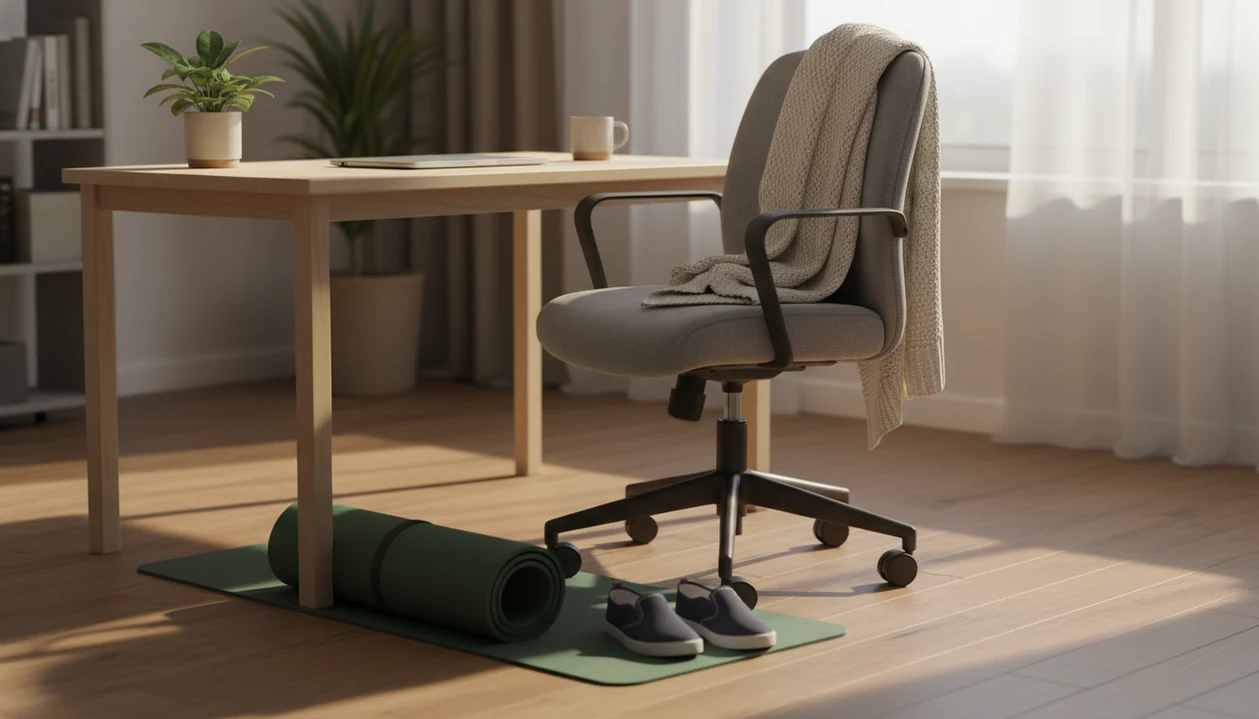
Mindful movement for burnout is gentle, low-intensity movement done with nonjudgmental attention to breath and body sensations. Slow walking, stretching or standing movement can give you a way to notice tension and fatigue without making recovery another performance goal. Start with five to ten minutes, keep your breathing natural, and adjust the movement rather than pushing through discomfort.
The aim is to support stress regulation and reconnect with your body, not to improve fitness or squeeze more work into the day. Short sessions of five to twenty minutes may be more manageable than long routines. Movement belongs alongside sleep, rest, boundaries and workload changes, with medical or mental health support when needed. It cannot resolve the working conditions that caused burnout.
What matters most
- Use mindful movement as nervous-system support, not as a workout or productivity hack.
- Short, consistent sessions of 5-20 minutes are usually more realistic for burnout than long routines.
- Mindful movement can help, but it does not replace sleep, boundaries, workload changes, medical care, or mental health support.
Five starting points for movement and burnout
- Mindful movement is low-pressure movement with attention. It links slow walking, stretching, standing sway, or gentle yoga shapes with breath, sensation, and present-moment awareness.
- Burnout is work-related, not just “being tired.” The World Health Organization describes burnout as an occupational phenomenon involving energy depletion, mental distance from work, and reduced professional efficacy WHO report.
- Mindfulness-based programs show burnout and stress benefits. Research in healthcare and workplace settings has found reduced burnout, perceived stress, and emotional exhaustion.
- Consistency matters more than duration. For burned-out people, five minutes beside a desk may be more realistic than a long class after work.
- Mindful movement works best inside a wider plan. The practical next step is movement plus rest, boundaries, workload review, sleep support, and care when needed. For women facing overlapping pressures, mindfulness for women's stress and burnout offers practices that complement rest and workload changes.
Small counts.
Beginner mindfulness and meditation practices can support steadier attention and awareness of stress, but they do not guarantee recovery from burnout.
Noticing fatigue and tension while you move
Mindful movement for burnout works by creating a quiet loop between breath, attention, body sensation, and low-intensity motion. Instead of pushing the body to perform, it gives the nervous system repeated signals of safety, pacing, and choice.
The loop is simple: you move slowly, notice what you feel, return to the breath, and adjust the movement before strain builds. This can strengthen interoception, which means the ability to sense internal cues such as tension, fatigue, warmth, pressure, or a tight chest. It may also support nervous-system regulation, a plain way of saying the body can shift more easily between activation and recovery. That is why mindful movement is not just exercise or stretching. Exercise often aims at fitness, endurance, strength, or measurable progress. Stretching alone may focus on range of motion. Mindful movement uses motion as an attention practice, so a small shoulder roll or slow walk can be complete if it helps you listen. Effects are supportive and variable, not a standalone cure for burnout, and they work best alongside rest, boundaries, workload changes, and care when needed.
Using movement as an anchor for stress awareness
Mindful movement for burnout works by pairing slow physical motion with attention to breath and body cues. That combination may help the body shift away from constant fight-or-flight activation and toward a more regulated state.
In plain terms, the movement gives attention a physical anchor: feet, breath, shoulders, hands, or pace. That anchor can make stress cues easier to notice before they turn into shutdown, irritability, or end-of-day collapse. Practicing mindful attitudes for reducing anxiety can help you meet stress cues with patience rather than judgment.
The key term is interoceptive awareness. It means noticing internal signals, such as jaw tension, warmth, fatigue, pressure, breath, or a heavy feeling in the chest. A burned-out person may ignore those cues all day, then crash at night. Gentle movement gives those signals somewhere to register. If anxiety accompanies exhaustion, mindfulness for women's anxiety offers grounding practices that can be adapted to your comfort.
This is different from performance-oriented exercise. You are not chasing pace, calories, flexibility, or a streak. You might roll your shoulders three times and notice that the exhale is heard in a quiet room. That counts.
However, the evidence base is important to read carefully. Many studies examine full mindfulness programs, not mindful movement alone. For burned-out workers, regulation-oriented movement is often easier than intense exercise because it asks the body to listen before it pushes.
What workplace mindfulness studies show, and what they do not
Mindfulness-based workplace programs have been linked with lower burnout and stress, but most research studies multi-part programs rather than movement by itself. The strongest reading is supportive, not curative.
A 2016 systematic review of 10 studies found large reductions in job burnout among healthcare professionals, with effect sizes up to 0.71 for emotional exhaustion PubMed research. A 2011 randomized trial of an eight-week mindfulness program for physicians reported a 22% reduction in burnout scores, with well-being improvements sustained at 15 months PubMed research.
A 2017 workplace mindfulness meta-analysis found significant reductions in perceived stress and burnout across occupations, especially emotional exhaustion PubMed research. An earlier MBSR study with healthcare workers included mindful movement, such as gentle yoga, and found decreases in burnout and stress symptoms compared with controls.
Clinicians typically recommend addressing burnout with workload changes, recovery time, social support, and mental health care when symptoms are severe. Mindful movement can sit inside that plan, like a quiet pause before hitting send.
A five-minute movement practice, step by step
Use mindful movement for burnout by making the practice small, repeatable, and easy to stop. The goal is to notice and return, not to complete a routine perfectly.
- Set a very small time window. Try 5 minutes with a phone timer, especially if your energy is low.
- Choose one low-effort movement. Use shoulder rolls, slow walking, seated stretching, or standing sway.
- Link movement with natural breathing. Let the breath stay easy instead of forcing deep inhales.
- Notice body sensations without grading yourself. Feel pressure, tightness, warmth, fatigue, or feet on carpet or tile.
- Stop before strain and write one cue down. Use a notebook after practice and record one thing you noticed.
One simple way to try it is before opening a laptop. Stand for three minutes, shift weight slowly, and notice where the body feels braced. For example, you might feel the calves gripping, the shoulders sitting near the ears, or one hand already reaching for the trackpad. If your mind wanders to a grocery list, that is not failure. Return to the next breath.
Choosing movement by energy, pain and available space
The best mindful movement practice is the one that lowers pressure rather than adds another obligation. Choose by energy level, privacy, pain, dizziness, trauma sensitivity, and how much space you actually have.
| Practice | Best for | Not for |
|---|---|---|
| Slow walking | Restless stress, lunch breaks, transitions | Dizziness, unsafe routes, severe fatigue |
| Seated stretching | Low energy, desk tension, private pauses | Pain that worsens with stretching |
| Gentle yoga shapes | Home practice, familiar poses, slow breathing | Anyone who feels pressured by yoga culture |
| Standing sway | Tiny resets, waiting periods, nervous energy | Balance problems or vertigo |
| Breath-paced mobility | Neck, shoulders, wrists, hips | Forced breathing or strain |
Best for low energy
Seated stretching and standing sway are often easiest when burnout feels heavy. Keep movements smaller than you think you need.
Best for work breaks
Slow walking to refill water can become a two-minute practice. For more options, use mindfulness exercises for work when a full break is not realistic.
Not for every burnout situation
Modify or pause for pain, dizziness, pregnancy, mobility limits, or trauma-related discomfort. Privacy matters too; no one needs to perform recovery in an open office.
Movement breaks between meetings and desk tasks
Mindful movement fits a workday when it is tied to cues you already have. You do not need special clothes, a mat, an app, or a quiet room.
- The 30-second reset: Before a calendar alert, lower your shoulders, soften your tongue from the palate, and turn your head slowly once each way.
- The 2-minute transition: Between meetings, stand up, stretch the sides of the body, and feel both feet land before the next call.
- The water-walk practice: Walk slowly to refill water and notice three sensations, such as pressure, temperature, and breath.
- The seated neck release: Sit back, unclench the jaw behind closed lips, and make small circles only if they feel safe.
- The end-of-day close: When the laptop closes, roll the shoulders and name one body cue before leaving the desk.
For task transitions, mindfulness between tasks can make the pause feel less like wasted time. The pocket check is real; many people reach for the phone before they notice they are exhausted.
When movement becomes another demand
Mindful movement can backfire when it becomes another demand. Burnout recovery needs less pressure, not a new scorecard.
- Turning it into a fitness challenge. If you start tracking steps, streaks, or flexibility, the practice may stop feeling restorative.
- Using movement to push through exhaustion. The point is to notice limits, not override them.
- Expecting one session to fix chronic burnout. A five-minute stretch can help today, but chronic stress needs a broader response.
- Ignoring work and life conditions. Sleep, workload, boundaries, pay pressure, caregiving, and support all matter. When caregiving adds to work stress, mindfulness for caregiver burnout can offer gentle practices alongside practical support.
- Forcing body awareness when it feels unsafe. Some people find body-focused attention triggering, especially with trauma histories.
If email is the trigger, a mindful email practice can pair one slow movement with a quiet pause before replying. Reset the plan.
Check whether recovery lasts beyond the movement break
Feeling better after a stretch is useful, but it does not tell you whether burnout is improving over time. A review of burnout-prevention interventions found that benefits generally diminished with time, while combined individual and organizational approaches tended to have more durable effects. Track sleep, exhaustion and everyday functioning alongside working hours, breaks and workload, rather than judging progress by how many sessions you complete.
Take stock at the start, then again after roughly one to three months and six to twelve months. These are practical review points, not a validated movement schedule. Ask what has changed at work as well as in your symptoms. A meta-analysis of organizational interventions supports addressing working conditions, although the evidence quality was very low. Worsening functioning or safety concerns warrant earlier clinical or occupational support.
Optional guided support for short recovery breaks
A beginner might use guided mindfulness to build consistency around short practices, such as a five-minute body check, a gentle breathing pause, or a simple transition after work.
The app is optional support, not a cure for burnout and not a replacement for workload changes, medical care, psychotherapy, or real rest.
For people comparing styles, a Mindfulness Practices App can be useful when it explains what this can and cannot do in ordinary language.
A timer for short movement breaks
During a workday movement break, a small time window can keep the practice from becoming another task to complete. Mindful.net’s free meditation timer can mark five minutes for gentle stretching or slow walking; the app also includes a meditation timer. Neither provides a movement assessment. Pain, severe fatigue or worsening symptoms call for appropriate professional support, not a longer session.
Gentle movement limits
- Mindful movement cannot fix harmful work conditions or structural burnout causes, and should not make them indefinitely tolerable.
- Mindful movement is not emergency treatment or a replacement for medical care, psychotherapy, crisis support, or occupational health guidance.
- Evidence may not generalize across jobs, cultures, disabilities, or life situations, and movement-only effects remain difficult to isolate.
- For screen-heavy fatigue, mindfulness for screen fatigue may fit better than movement during some workdays.
Mindful movement and burnout questions
Can mindful movement help with burnout?
It can be a supportive practice for noticing stress, tension and fatigue without pushing harder. Research on workplace mindfulness programs reports benefits for burnout and stress, but usually studies several practices together rather than movement alone. Gentle movement is not a cure and cannot replace changes to excessive or unsafe work demands.
How long should I practice when I feel burned out?
Start with five minutes, or a shorter pause if that is all you can manage. Five to twenty minutes may be more realistic than a long routine, but this is a practical starting range, not a proven treatment dose. Stop before strain builds, and do not extend the session just to meet a target.
What movement should I choose when I have very little energy?
Seated stretching or small shoulder movements may be more manageable than walking or standing. Choose something you can adjust or stop easily, and pay attention to fatigue rather than trying to overcome it. Severe fatigue may call for rest and assessment instead of movement, especially when it is affecting daily functioning.
Do I need yoga for burnout recovery?
No. Slow walking, seated stretching, shoulder rolls or gentle standing sway can all provide a physical focus for attention. Yoga is one option, not a requirement. The important features are low effort, natural breathing and permission to stop, rather than particular poses, flexibility or completing a set routine.
How can I practice mindful movement at my desk?
Try a brief pause between tasks: lower your shoulders, unclench your jaw and turn your head slowly within a comfortable range. Notice pressure, warmth or tension without grading the experience. A seated stretch or a slow walk to refill water can also fit a workday without special clothes or equipment.
Should mindful movement feel relaxing straight away?
Relaxation is not a requirement. A session may simply make fatigue or tension more noticeable. Keep the movement small and the breath natural, and avoid forcing a calmer feeling. Adjust or stop if discomfort increases. The practice should help you recognize limits, not become another test you have to pass.
Is mindful movement the same as exercise?
They can overlap, but their immediate aims differ. Mindful movement emphasizes attention to sensations and limits rather than fitness, speed, steps or flexibility. A slow walk can be both physical activity and mindfulness practice. During burnout, avoid turning the session into a challenge or using it to push through exhaustion.
When should I get professional help rather than rely on movement?
Seek assessment when exhaustion persists, daily functioning worsens, or sleep, depression, anxiety or substance use become concerns. Burnout is work-related and is not a medical diagnosis; similar symptoms can have other causes. Suicidal thoughts or immediate safety concerns require urgent help, not a movement practice. Workplace risks also need review.