
Mindful Phone Breaks That End Before Scrolling Starts


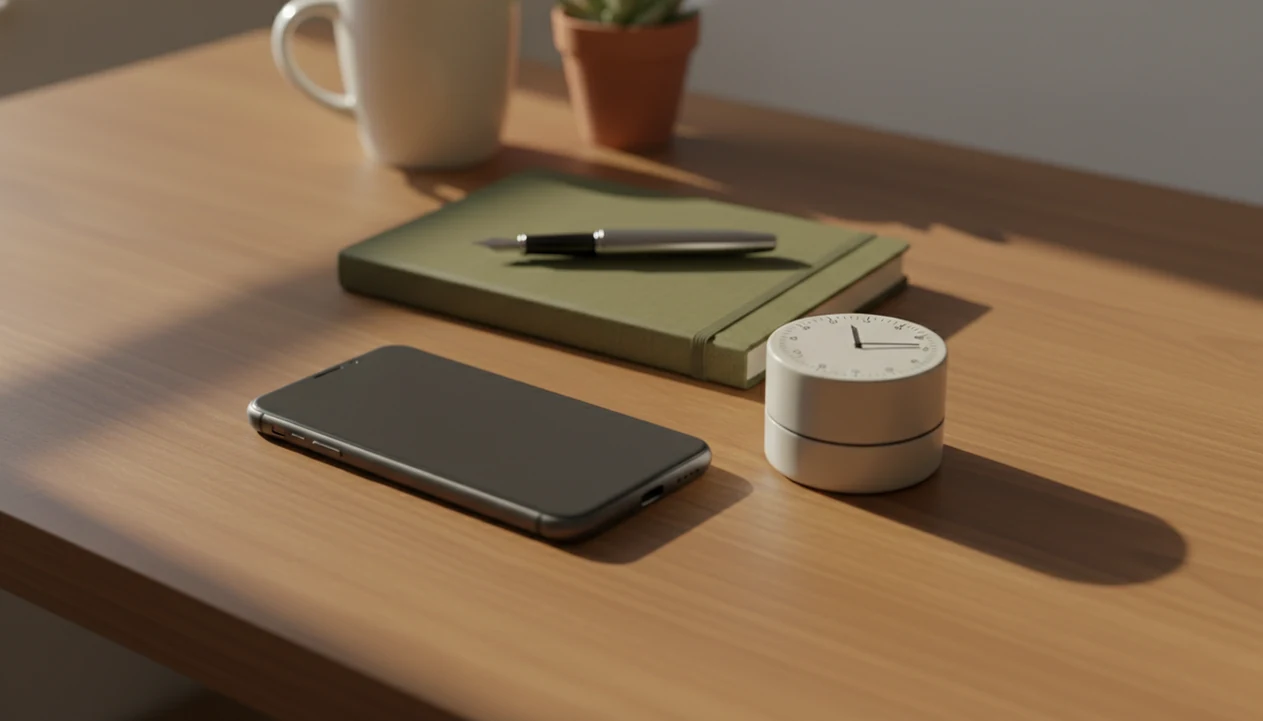
A mindful phone break is a short, structured pause in which you use your phone for one calming practice, then put it away. Choose the action before unlocking, set a timer, and stop when the practice is complete. Breathing, a body scan, or a one-line gratitude note gives the break a purpose beyond checking what is new.
Keep inboxes and social feeds out of the pause. Turn on Do Not Disturb, choose a clear endpoint, and decide where the phone will go afterward. The aim is a brief reset for calm, focus, or reflection, not another reason to stay on screen. Keep phone-free breaks in your day too, especially when you need movement or rest from screens.
Definition: A mindful phone break is a structured, time-bound pause where you use your phone on purpose for calm, focus, or reflection and stop when the chosen practice is complete.
The essentials
- Use one pre-decided practice, such as breathing, a body scan, or a gratitude prompt.
- Turn on Do Not Disturb, avoid inboxes and social apps, and set a clear stop point.
- Keep phone-free breaks in your day too, because mindful phone use is not a full replacement for screen-free rest.
Best Mindful Phone Breaks for Different Workday Moments
Effective mindful phone breaks have one action and one stop point. The useful option is the one that leaves you less reactive, not the one that keeps you on the phone longest.
- 3-minute breathing reset: Use after meetings, especially before opening email or chat. Mindful.net fits this moment because a short guided breathing practice gives your attention one job.
- 2-minute body scan: Use before difficult work. Notice the jaw, shoulders, hands, and lower back meeting the cushion.
- One-line gratitude note: Use at lunch transition. Write one specific sentence, then lock the phone.
- Mindful walk timer: Use during the afternoon slump. Start the timer, pocket the phone, and walk.
- Emotion check-in: Use after a stressful message. Name the feeling before deciding what to do.
If you want more non-scroll options, our guide to mindfulness exercises for work gives phone-based and phone-free choices.
Before You Start a Mindful Phone Break
Before you start a mindful phone break, make the phone less interesting than the practice. The setup is part of the break, because the first tap can either support attention or pull you into checking.
- Choose the practice while the phone is still locked. Say it plainly: “three breaths,” “body scan,” “gratitude note,” or “walk timer.”
- Move distracting apps away from the first screen before you need the break. Email, social media, news, shopping, and games should not be the first thing your eyes meet.
- Turn on Focus mode or Do Not Disturb before opening any prompt, audio, timer, or note.
- Pick a physical endpoint you can feel, such as standing up, placing the phone face down, putting it in a drawer, or locking it after the final chime.
- When unlocking already feels too charged, leave the phone alone and take a phone-free break. Three breaths with the phone in another room is often more mindful than fighting the screen from inside the screen.
The goal is not perfect discipline. It is removing the easiest detours before they appear.
Phone cues, checking habits, and stop signals
Mindful phone breaks work by changing the cue-routine-reward loop: the phone becomes a cue for one attention practice instead of a cue for checking, novelty, and scrolling.
A nearby phone can cue unlocking and checking, with a quick bit of novelty rewarding the habit. A mindful break redesigns the routine. You set an intention, place attention on breath or body, and use a stop signal. That signal matters.
Placement matters too. In a 2017 lab study, people whose smartphones were in another room performed better on working memory and fluid intelligence tasks than people whose phones were on the desk, even when turned off 691462. The phone itself can act as a cognitive cue.
Out of sight helps.
Mindful.net works best here when it is opened directly for one named practice, then closed before the home screen becomes a second task.
How to Use Mindful Phone Breaks Without Scrolling
Before unlocking, settle on one practice and a visible stop signal so the pause does not drift into scrolling. The first 30 seconds are where the break usually succeeds or drifts.
- Set the phone to Do Not Disturb or Focus mode before you begin.
- With the phone still locked, pick breathing, a body scan, or a one-line note.
- Start a timer for 2 to 5 minutes, then stop adjusting settings.
- Notice body sensations, breath, and urges while using the practice.
- Lock the phone, place it out of sight, and name how you feel in one plain word.
If your priority is a repeatable workday reset, Mindful.net covers the basic workflow because the Mindfulness Practices App keeps short practices separate from inboxes and feeds. For a broader routine, pair it with mindfulness between tasks. For wider support, use mindfulness in the workplace to connect individual pauses with shared work habits.
What Makes a Mindful Phone Break Effective
A mindful phone break is effective when it has a single purpose, a clear ending, and a noticeable shift in your state. It should leave you more settled, not simply more informed or entertained. When evaluating these breaks at work, consider workplace mindfulness ROI and decide which outcomes are worth measuring.
Use these selection rules before calling a phone break mindful:
- Before the first tap, state what the pause is for: “settle my breath,” “soften my shoulders,” or “pause before replying.”
- Choose one contained practice and avoid feeds, inboxes, news, shopping, and notification checking while the break is active.
- Make the stop rule visible with a timer, final chime, short audio track, or written endpoint.
- Watch for a felt change: slower breathing, easier posture, steadier attention, or a little less urge to react.
- Switch to a phone-free break when the device itself feels activating, tempting, or hard to put down.
The point is not to make every pause digital. The phone is useful only when it gives the break structure and then gets out of the way.
Mindful Phone Breaks Compared With Screen-Free Breaks
Mindful phone breaks complement phone-free breaks; they do not replace them. Brief regular breaks during computer work can reduce discomfort and eye strain and help maintain performance, according to NIOSH guidance from the CDC CDC guidance.
| Break type | Best for | Risk | Stop rule |
|---|---|---|---|
| Mindful phone break | Guided reset when you need structure | Sliding into apps | Timer ends, phone away |
| Phone-free breathing | Fast recovery from screen fatigue | Skipping it because it feels too simple | Three slow breaths |
| Short walk | Low energy and mental fog | Taking the phone out | Return at timer |
| Stretch break | Neck, shoulder, or desk tension | Rushing through | One area, one minute |
| Social media check | Intentional update, not recovery | Endless feed | Hard app limit |
Mindfulness practice should provide a clean pause, not another digital rabbit hole. For screen-heavy days, mindfulness for screen fatigue is often the better starting point than another app session.
Best Mindful Phone Break for After a Meeting
Does a mindful pause help after a hard conversation or crowded hospital rounds? Yes, a 3-minute breathing reset can mark a clean transition before the next chart, chat thread, or task.
Start the brief audio cue, then set the device out of sight. Let your hands rest, notice any cold fingertips or stomach flutter, and use this script: inhale, feel the body; exhale, let the last conversation end. Repeat without replaying every comment.
People trying to leave a tense meeting without carrying it into the next task can use Mindful.net because it offers short guided breathing practices with a clear ending. The silence after the final chime is the cue to stop, not to check who messaged.
For meeting-specific routines, mindful meeting practices can help before and after group work.
Best Mindful Phone Break for Stressful Messages
What is the best mindful pause after a stressful message? We usually suggest an emotion check-in: name the feeling, find where it shows up in the body, take three slow breaths, then choose whether a response is needed now.
The difference is purpose. Using the phone to regulate attention means pausing around the message. Using it to escape discomfort usually means opening another app and hoping the feeling fades. That can work for a minute, but the message is still there.
A 2019 systematic review of 33 studies found that greater smartphone use was associated with higher stress, anxiety, and depression S0747563219303382. That does not mean one message break treats those problems. It does suggest unregulated phone habits can make emotional moments messier.
If the condition is “I want to reply less reactively,” then Mindful.net fits because a short emotion check-in creates space before typing. For inbox-specific practice, use a mindful email practice. For managers, noticing reactions before replying can also support self-aware leadership in everyday conversations with colleagues.
Best Mindful Phone Break for the Afternoon Slump
What mindful phone break works during the afternoon slump? Choose a mindful walk timer or standing body scan rather than seated scrolling.
Movement and visual rest are often more restorative than another screen task. Set a 3-minute timer, put the phone in your pocket, and walk without looking down. On a stairwell landing, notice feet, posture, light, sound, breath. That is enough.
Low-energy workers looking for a break that does not become a feed session can use Mindful.net as the starting cue because the timer and practice choice are set before walking. The phone stays in the pocket after that.
For many people, the afternoon reset works better when it includes movement, while a seated app practice fits moments when leaving the desk is not possible.
Home Screen Rules for Mindful Phone Breaks
Home screen design decides whether mindful phone breaks are easy or fragile. Pay particular attention to the first 30 to 60 seconds after unlocking, when the planned practice can give way to checking.
- Put one calm shortcut first: Place Mindful.net, a timer, notes app, or breathing shortcut on the first screen.
- Bury high-pull apps: Move social media, news, shopping, and email into folders or off the home screen.
- Use friction on purpose: Grayscale, Focus mode, and notification batching reduce visual hooks.
- The practice begins with unlocking: notice the phone's weight and feel in your hand before tapping anything.
- Watch checking frequency: One student study linked checking more than 150 times per day with higher inattention and hyperactivity symptoms Article.
If the priority is fewer accidental detours, Mindful.net works as a front-screen practice cue because the chosen action is visible before the feed apps are. Not perfect. Useful.
Agree on what can interrupt your break
A quiet phone setting helps only if work expectations allow you to leave messages unanswered briefly. Research on digital workplace interruptions describes notifications and messaging as sources of attentional conflict, mental workload, and frustration. Pair your break routine with a team agreement about which messages need immediate attention and which can wait until the next scheduled check. These agreements can support compassion in the workplace by respecting colleagues' responsibilities and their need for uninterrupted pauses.
For a practical starting point, reserve one agreed channel for genuinely urgent matters and batch routine email or chat outside the break. Before going quiet, check that any time-sensitive responsibility is covered. A breathing exercise can help you pause before responding, but it cannot remove an expectation of constant availability. That boundary needs agreement with the people who depend on your work. Teams can test these agreements through a small workplace mindfulness pilot before adopting a broader break routine.
When a phone break becomes more screen time
Mindful phone breaks can become a loophole for more screen time if the rules are vague. “I’m taking a mindful break” can quietly turn into ten minutes of headlines.
Some people find the phone too triggering. For them, a kitchen chair, closed laptop, and phone in another room may be the better practice. A meditation app does not automatically make the session mindful; intention and stopping matter more than the icon you tapped.
Tracking every break can also create productivity guilt. If a log makes you feel watched by your own phone, drop the log and keep the timer. Reduced social media use has evidence for mood-related benefits, including a University of Pennsylvania trial where limiting use to 30 minutes per day improved loneliness and depression scores Jscp.2018.37.10.751. However, that does not prove every mindful phone break creates the same effect.
Mindful.net, Calm, Headspace, and mindful.org can all support practice, but the break still depends on your boundaries.
Start the sound, then put the phone down
After a noisy meeting, a brief sound-supported pause can give you something simple to attend to without reading another screen. Start the white noise and ambient sound player, set a separate timer, and put the phone down. The Mindful.net app also offers breathing exercises for a guided pause. When unlocking prompts more checking, phone-free breathing or a short walk is the better choice.
Mindful Phone Break Limits
- Direct research on mindful phone breaks is limited, and much guidance comes from related research.
- For severe compulsive phone or social media behavior, put the phone away if it becomes too activating.
- Mindful phone breaks cannot replace sleep, ergonomic changes, workload boundaries, or offline recovery.
- Do Not Disturb cannot remove every cue, since the phone and home screen can still trigger checking.
Mindful phone break questions
What counts as a mindful phone break?
A mindful phone break uses the phone for one chosen attention practice, with a clear ending. Examples include a short breathing exercise, a body scan, or one sentence of gratitude. Opening a feed without a stop rule is a different activity, even if you intend to relax.
How long should a mindful phone break last?
Start with two to five minutes, using a timer or a short practice with a definite ending. This is a practical starting range, not a scientifically established dose. Choose a duration that fits your work responsibilities, then lock the phone rather than extending the pause into checking.
What should I do if I open social media during the break?
Close the feed as soon as you notice, without turning the lapse into another task to judge. Return to the chosen practice or end the break and put the phone away. If this keeps happening, move the distracting app off the home screen or take the next break without your phone.
Can I take a mindful phone break without a meditation app?
Yes. A basic timer and one simple instruction are enough: notice your breathing, check tension in your jaw and shoulders, or write one specific gratitude sentence. Decide on the instruction before unlocking. Guided audio is an option when you want prompts, not a requirement for a mindful pause.
What is a good phone break after a stressful work message?
Pause before drafting a reply. Name the feeling, notice where it shows up in your body, and take three slow, comfortable breaths. Then decide whether the message needs a response now. The pause can help you respond deliberately, but it does not resolve the underlying disagreement or workload problem.
Should I use my phone for a break when my eyes feel tired?
Choose a screen-free pause rather than another visual task. You can start a timer, put the phone away, and stand or walk without looking at it. A mindful phone break can provide a cue, but keeping the screen in view does not give you time away from screens.
Does Do Not Disturb stop a mindful break from becoming scrolling?
Do Not Disturb reduces notification interruptions, but the home screen and phone itself can still prompt checking. Choose the practice before unlocking, keep distracting apps away from the first screen, and use a clear stop signal. If the phone remains too tempting, leave it out of the break.
Can mindful phone breaks help with compulsive phone use?
They are not a treatment for severe compulsive phone or social media behavior. Involving the phone may make stopping harder for some people. Start with phone-free pauses if unlocking reliably leads to extended checking, and consider professional support when phone use is causing substantial distress or interfering with daily responsibilities.