
Meditation for High Performers Without Scorekeeping
A common beginner mistake is treating meditation like guitar practice with a hidden audition at the end. Meditation for high performers works better as attention training than as another metric to master. The aim is to recognize distraction, return to the present task, and build steadier focus and recovery without demanding a blank mind.
> Meditation for high performers is a practical, secular mindfulness practice that helps driven people train attention, regulate stress, and recover from distraction without turning meditation into a productivity contest.
TL;DR
- Use meditation as attention training, not as a peak-performance hack.
- Short, consistent sessions are usually more sustainable than long sessions done under pressure.
- The strongest evidence supports stress regulation, emotional steadiness, and attention control rather than guaranteed elite output.
What meditation gives high performers when they stop trying to win it
Meditation for high performers is awareness training for people who operate under pressure, make frequent decisions, or carry a lot of responsibility. It trains attention, awareness, and recovery from distraction, not passivity or lowered ambition.
You do not need to become less driven. The useful skill is catching the moment your mind has already raced from the current design review to the next obligation, then guiding it back to one chosen anchor. Breath, surrounding sound, the aroma of coffee, or the warmth of a mug in your palms can all work.
A blank mind is not the assignment.
Good mindfulness practices and meditation techniques for beginners and daily life offer a repeatable way to come back to the present, not a promise that every demanding shift, class period, code review, or hospital round will feel calm and polished. One pattern we notice is that high performers often benefit from practicing without scores, streaks, or self-critique. Mindful.net's Mindfulness Practices App can help beginners learn the basics without turning the practice into a leaderboard.
Five facts about mindfulness for high performers
- Meditation works best as attention training. For driven people, the point is not squeezing one more output from the day. It is practicing where attention goes, especially under pressure.
- The core repetition is simple. You choose an anchor, get distracted, notice it, and return. That return is the practice.
- Breath is an easy starting point. Belly rising against a waistband is available in an office chair, airport lounge, or parked car.
- A blank mind is not required. Thoughts are expected. The useful moment is noticing them without turning the session into a self-critique.
- The credible benefits are modest but useful. Mindfulness for high performers is better supported for stress regulation, emotional steadiness, and attention control than for guaranteed peak productivity.
For a related role-specific guide, founders may want to compare this with meditation for founders.
Attention training mechanism for high performers
Meditation works through a simple attention cycle: choose an anchor, lose it, recognize that you lost it, and return. In plain language, you rest attention on breath, sound, or a body sensation such as warm cheeks after a walk; the mind moves; you notice the shift; you begin again.
That cycle may support selective attention and executive control because it repeatedly practices choosing one target while reducing automatic pull toward everything else. The technical terms are “selective attention” and “executive control.” For most people, that means staying with one task a little more cleanly and recovering faster when attention breaks.
A 2007 randomized study found that an 8-week mindfulness program was associated with significant improvements in attentional blink performance, a measure of selective attention PMC research article. A 2012 controlled study also reported fewer Stroop task errors among meditators than non-meditators, suggesting better executive attention in that sample Full.
The practical next step is small: three minutes before opening the laptop. Not heroic, just repeatable.
Five-step performance meditation routine without pressure
Use this routine as performance meditation without pressure: keep it short, choose one anchor, and end with a reset rather than a score. Two to five minutes is enough for a starting session.
- Set a timer for 2 to 5 minutes so the practice has a clear boundary.
- Choose one anchor, such as breath, body sensation, or room sound.
- Notice when attention moves to planning, judging, replaying, or problem-solving.
- Return to the anchor without labeling the session good or bad.
- End by naming one practical next step, then move into the next task.
If you sit on a folded towel on bedroom carpet, that counts. If you practice in an office stairwell between calls, that counts too. The reset matters more than the setting.
People who want a workplace-specific version can adapt this through how to practice mindfulness at work.
Best meditation styles for driven people
The best style is the one you will actually repeat when your calendar is full. For high achiever mindfulness, choose a method that lowers friction rather than one that sounds impressive.
| Meditation style | Fits best for | Simple way to try it |
|---|---|---|
| Breath meditation | Busy people who want one portable anchor | Count five slow exhales before a meeting |
| Body scan | People who hold stress physically | Move attention from forehead to feet |
| Walking meditation | Restless thinkers or movement-oriented people | Feel each footstep for one hallway length |
| Guided meditation | Beginners who want structure | Use a short voice-led session |
| One-minute reset | People between tasks | Pause, exhale, notice the next action |
Guided practice can help when silence feels too open-ended, but some driven people prefer unguided breathing because it removes decision-making. Apps such as Mindful.net, Calm, and Headspace can make comparisons easier when you are deciding between formats.
Best-fit and poor-fit cases for high achiever mindfulness
High achiever mindfulness is a good fit when the goal is steadier attention, smoother transitions, and better recovery from distraction. It is a poor fit when it is used to dodge sleep, workload limits, or qualified care.
Best for:
- Context-switchers: people moving between meetings, Slack, email, and focused work.
- Overthinkers: people who replay conversations long after the day ends.
- Pressure carriers: people who bring work stress into dinner, rest, or sleep.
- Ambitious beginners: people who want a secular practice without spiritual framing.
Not ideal for:
- Instant-output seekers: meditation does not guarantee a better sales call, faster code review, or cleaner presentation.
- Burnout situations: workload changes, rest, or professional support may matter more.
- Medical or mental health crises: meditation is not a replacement for therapy or medical treatment.
Managers may also want a role-specific version of meditation for managers.
Evidence behind mindfulness for high performers
The evidence is stronger for stress regulation and attention than for dramatic performance transformation. That distinction matters, because high performers are often sold certainty where the research is more measured.
A 2014 analysis of 163 studies found moderate evidence that meditation programs reduced anxiety, depression, and pain, with stronger effects among people who already had symptoms. JAMA study That does not mean meditation is medical treatment by itself. It means the stress-related evidence is worth taking seriously.
Attention studies are also relevant. The 2007 attentional blink study linked mindfulness training with selective attention improvements, while a 2012 controlled Stroop task study reported greater executive control among meditators. Per the U.S. Department of Defense’s Human Performance Resource Center, mindfulness meditation may support stress resilience, emotional self-regulation, sleep, and problem-solving ability. Mindfulness Meditation
The most defensible takeaway is simple: meditation can support attention and recovery, but it should not be sold as a universal performance upgrade.
Common mistakes in meditation for driven people
The most common mistake is treating meditation like another task to optimize. Driven people often bring the same measuring mind to practice that they use for revenue, training plans, inbox zero, or quarterly goals.
A few pressure patterns show up again and again:
- Trying to force a blank mind instead of practicing return.
- Tracking every session as a performance score.
- Choosing 30-minute sessions when five minutes would actually happen.
- Using meditation to avoid sleep, a hard conversation, or a workload boundary.
- Judging the practice only by whether it felt calm immediately.
The progress bar can feel too slow. That does not mean the session failed.
For driven people, short breath meditation is often easier than long silent sitting because it gives the mind one clear action and a fast reset. If the practice starts making you tense, shorten it and remove the scorecard.
Image caption for performance meditation without pressure
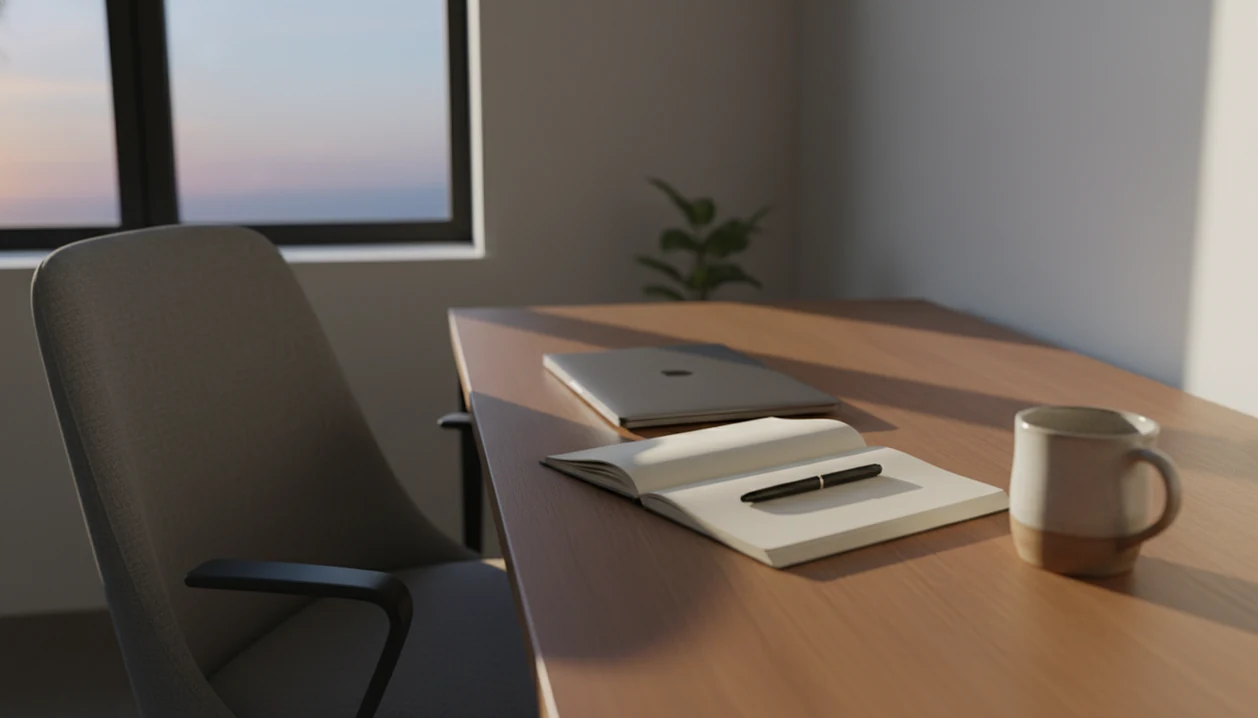
Caption: A high performer pauses at a desk between tasks, resting attention on one breath before returning to work. This image shows meditation for high performers as a simple reset for awareness, steadier focus, and recovery from distraction, not as a luxury ritual or achievement display.
The scene should feel ordinary: a laptop, notebook, chair, and a few quiet seconds before the next task. No mountaintop pose. No spiritual authority cue. No suggestion that the person has conquered stress.
Screen glow on tired eyes is enough.
A grounded image supports the message of performance meditation without pressure: a teacher between classes holding a warm coffee mug, noticing the next urge to rush, returning to one steady breath, and then taking the next useful action.
Limitations
Meditation can be useful, but it has real limits. Those limits matter most for people who tend to push through warning signs.
- Meditation is not a substitute for sleep. Tired brains still need rest.
- Meditation is not a substitute for workload management, staffing changes, boundaries, or recovery time.
- Meditation is not therapy or medical treatment for severe stress, anxiety, depression, trauma symptoms, or crisis situations.
- Research supports stress and attention benefits more clearly than universal peak-performance claims.
The practical aim is steadier awareness, not self-improvement pressure in quieter clothing. A beginner comparing tools can use a best mindfulness app guide to choose a lower-friction option.
A One-Minute Version
Before you start, treat the first minute as a check-in rather than a performance test. We usually suggest a named method such as the Clipboard Breath: feel the clipboard, counter, instrument case, or rail in your hand, take three ordinary breaths, and name the next single action. The point is not to become calm on command; the point is to reduce the number of decisions competing for attention.
Maintenance Routine Worth Keeping
- Use the same cue each day, such as a stairwell pause, scrub sink, practice room doorway, or loading dock threshold.
- Keep the session short enough that you would still do it on a difficult day; two steady minutes often beats one ambitious session you avoid.
- Pair attention training with a real work transition: before rounds, after rehearsal, between customer rushes, or before reviewing a checklist.
- Track completion only if it stays neutral; if the log becomes another scorecard, drop the log and keep the practice.
- For more work-specific applications, connect this reset to broader Mindfulness at Work guidance rather than treating it as a separate self-improvement project.
Signs You Should Try Another Approach
Meditation may not be the best first tool when the immediate problem is sleep debt, unsafe staffing, unclear priorities, or a conflict that needs a conversation. If a nurse is covering too many patients, a parent is running on three hours of sleep, or a stage manager lacks a confirmed cue sheet, practical support may matter more than another breathing exercise. Attention training tends to work best when it supports action, not when it replaces rest, planning, or asking for help.
One Mistake We Notice Often
What surprised us most is that high performers often relax once the instruction becomes less impressive. We have seen nurses, musicians, athletes, and managers do better with one plain cue than with elaborate routines. One pattern we notice is that the urge to optimize the practice can become the distraction itself. We usually suggest keeping the first version almost boring, then adjusting only after it is repeatable.
A Practical Comparison
- Mindfulness and relaxation overlap, but they are not identical: relaxation aims to downshift arousal, while mindfulness trains noticing and returning.
- Research summaries often suggest mindfulness can support attention and stress regulation, but the size of the effect varies by population, dose, and study design.
- We do not know that meditation is superior to relaxation for every high performer; for some people, progressive muscle relaxation or a quiet break-room pause may be a better match.
- If the goal is recovery after a shift, relaxation may fit; if the goal is noticing distraction during a task, mindfulness may fit better.
- Decision support beats generic calm advice when someone is choosing between techniques.
When Another Tool Fits Better at Work
Imagine an athletic trainer between games, holding a clipboard while three people ask for decisions at once. A one-minute breath can help mark the transition, but if the real issue is unclear triage, the better tool is a written priority order or a quick handoff script. Meditation supports the operator; it does not replace the operating system.
Technique Snapshot
| Technique | Best for | Minutes |
|---|---|---|
| Clipboard Breath | resetting before a specific task without turning calm into a score | 1-3 min |
| Stairwell Pause | separating one work episode from the next during shifts or performances | 2-5 min |
| Mindful Walking | using movement between rooms, wards, studios, or job sites as attention practice | 3-10 min |
The best reset is the one that lowers decisions, not the one that proves discipline.
Why Mindful.net fits this specific need
Mindful.net is useful here because it treats meditation as practical attention training rather than a personality makeover. Pair this guide with Mindfulness at Work for workplace context, or use Mindful Walking when movement between tasks is easier than sitting still.
FAQ
Can high performers meditate?
Yes. High performers can meditate without becoming less ambitious, because the practice trains attention and recovery rather than removing drive.
Does meditation improve performance?
Meditation may support focus, stress regulation, and emotional steadiness. It does not guarantee elite output, better rankings, or constant productivity.
Do I need a blank mind to meditate?
No. Thoughts are normal during meditation, and the practice is noticing distraction and returning attention.
How long should I meditate if I am busy?
Start with 2 to 5 minutes and repeat it consistently before trying longer sessions. A short daily practice is usually more realistic than an occasional long one.
What is performance meditation?
Performance meditation is attention and recovery training for demanding situations. It works best when it is not treated as productivity optimization.
Can meditation replace sleep?
No. Meditation cannot replace sleep, therapy, medical care, or workload changes when those are needed.