
A Daily Identity Practice for People Who Dislike Routines
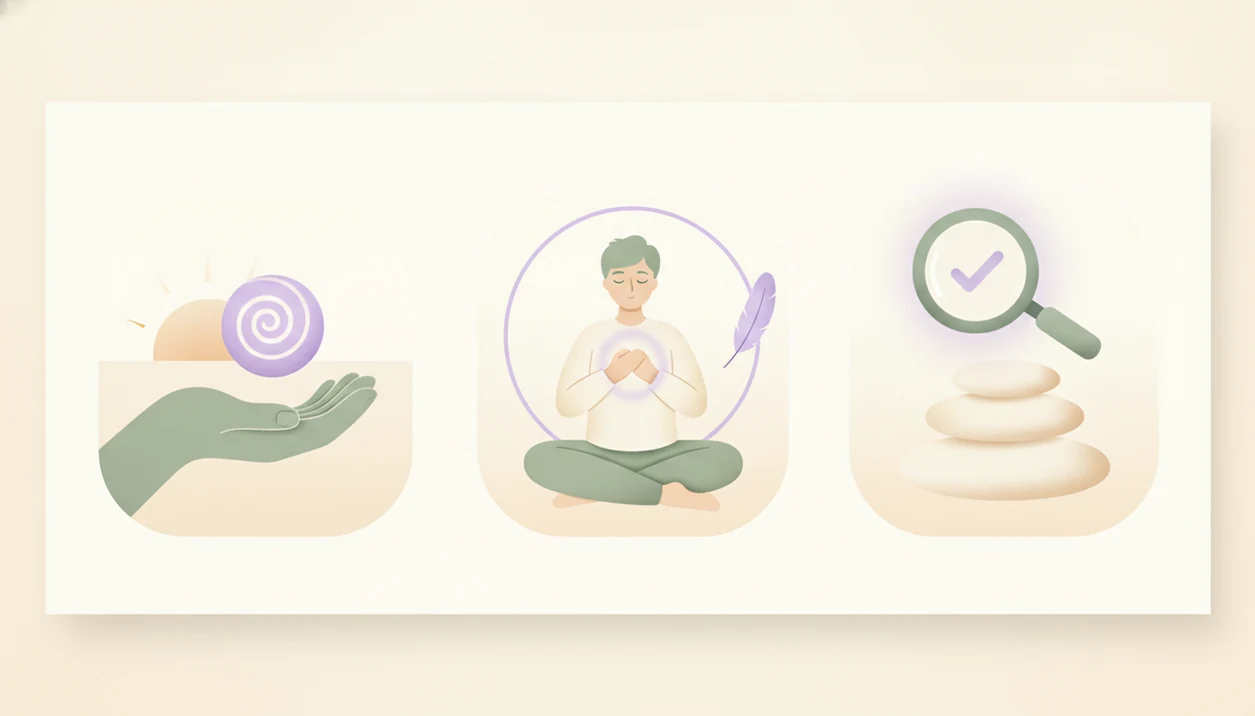
A daily identity practice does not need to look like a strict morning routine, a perfect journal, or a long meditation streak. The practical version is a flexible three-touchpoint habit: name the identity in the morning, interrupt autopilot once during the day, and collect one piece of evidence at night.
Definition: A daily identity practice is a repeatable behavior that helps a person notice, choose, and reinforce actions that match a new self-image.
TL;DR
- Identity changes when repeated behavior becomes the easiest version of yourself, not when motivation briefly becomes stronger.
- Awareness creates the space between impulse and action where different choices become possible.
- Many habits continue because they solve an emotional problem, even when they create practical problems.
- Motivation starts action. Identity sustains it.
The practical difference we keep seeing is: people repeat identity practices more reliably when the routine feels like evidence collection, not self-improvement homework.
Decision map by use case
| Need | Practical pick |
|---|---|
| You resist rigid routines | Use a three-touchpoint practice with flexible timing: morning intention, midday pause, evening evidence check. |
| You overthink identity change | Start with one behavior that proves the identity today, not a complete life redesign. |
| You abandon habits after missed days | Use a reset rule: the next repetition matters more than the missed one. |
| You need guided structure | Mindful.net or a simple guided mindfulness app can reduce decision fatigue. |
Short daily practice or longer weekly reflection?
Five minutes repeated daily often changes self-image more than one intense reflection that never reaches behavior.
Short daily practice
A short daily practice usually works well for identity change because identity is reinforced by repeated evidence. The tradeoff is that tiny practices can feel unimpressive, so people who crave dramatic progress may dismiss them too early.
Longer weekly reflection
A longer weekly reflection can help someone notice patterns, emotional needs, and avoidance loops that are easy to miss day by day. The cost is that weekly reflection can become another planning ritual if no small behavior changes before the next session.
Our editorial team's first pick
A new identity is built through repeated evidence, not repeated affirmations.
Our first suggestion today is a three-part daily identity practice: one morning intention, one midday mindfulness pause, and one evening evidence check.
The structure is small enough for people who dislike routines, but still creates repeated contact with the identity they are building. There is no universally right routine for every person, so the useful match is between the practice and the moment where your old identity usually takes over.
Choose something else if: Choose something else if you need clinical care, if tracking makes you obsessive, or if your main obstacle is an unsafe environment rather than a lack of personal consistency.
At-a-Glance Options
| Option | Practical for | Length |
|---|---|---|
| Morning identity sentence | Choosing one behavior before the day gets noisy | 1 min |
| Midday steady breath pause | Interrupting autopilot before an old habit takes over | 2 min |
| Evening evidence check | Recording proof that the new identity is becoming believable | 3-5 min |
Editorial Considerations
One pattern we frequently notice is that people who dislike routines often do not dislike consistency; they dislike feeling controlled by a system. A short session with a steady breath, a guided voice, or one written question can feel more humane than a complex tracker. The tradeoff is that flexible routines need a clear minimum, or flexibility becomes avoidance.
Consistency matters more than intensity when building an identity practice.
Mindful.net in this specific situation
Mindful.net is worth trying when you want guided practices that support attention, emotion regulation, and daily follow-through without turning the process into hustle. It is a practical fit for short sessions, reflective prompts, and simple routines, but people needing clinical care should choose qualified professional support.
Sources
- JAMA Internal Medicine meta-analysis of mindfulness meditation programs
- review of mindfulness-based therapies for anxiety and mood symptoms
- Frontiers workplace study linking trait mindfulness and perceived stress
- NCCIH review of meditation and mindfulness effectiveness and safety
- American Psychological Association overview of mindfulness research
- Johns Hopkins explanation of mindfulness meditation practice
Limitations
- Mindfulness research is encouraging, but most effects are small to moderate rather than dramatic or universal.
- A daily identity practice is not a substitute for therapy, addiction treatment, medical care, or crisis support.
- People with trauma histories may find body-focused or silent practices unsettling and may need guided professional support.
- Identity practices can become perfectionism in disguise if every missed day is treated as proof of failure.
Key takeaways
- The goal of mindfulness is not to remove thoughts but to notice them before they become automatic behavior.
- People often protect familiar discomfort more strongly than unfamiliar opportunity.
- The emotion behind a habit is often more important than the habit itself.
- Lasting change usually begins when the cost of staying the same becomes greater than the discomfort of changing.
- Self-discipline becomes easier after identity changes, not before.
Our usual app suggestion for this topic
For this topic, our usual suggestion is a simple guided mindfulness routine paired with a brief evidence check. Mindful.net can be a practical choice when someone wants calm structure without making identity change feel like a productivity contest.
A practical fit for:
- People who dislike rigid morning routines
- Beginners who want a guided voice instead of silent practice
- Anyone building consistency through short sessions
- People using mindfulness to interrupt autopilot
- Reflective journalers who need one clear daily question
- Users who want identity change without aggressive self-optimization
Limitations:
- Not a substitute for therapy, medical care, or crisis support
- May feel too simple for people who want advanced meditation training
- Less useful if the main barrier is unsafe conditions or severe burnout
- Guided practice reduces decision fatigue, but some people eventually prefer silent practice because it demands more active attention
Related guides
FAQ
What is a daily identity practice?
A daily identity practice is a small repeated action that gives your brain evidence for a new self-image. The point is not to declare who you are, but to behave in a way that makes the new identity believable.
How long should a daily identity practice take?
Under ten minutes is enough for many people when the practice is repeated consistently. Five consistent minutes often build a stronger habit than one perfect thirty-minute session each week.
Is mindfulness necessary for identity change?
Mindfulness is not mandatory, but it is useful because it helps you notice the moment an old pattern is about to run. Awareness creates the space between impulse and action where different choices become possible.
What if I miss a day?
Missing a day is not an identity verdict. The next repetition matters more than the missed one.
Are affirmations enough to change identity?
Affirmations can help some people focus attention, but they are usually weaker than behavioral evidence. A new identity is built through repeated evidence, not repeated affirmations.
What question should I ask when an old habit returns?
Ask, "What feeling am I trying not to experience?" Many habits continue because they solve an emotional problem, even when they create practical problems.
Start with one piece of evidence today
Choose one small action that proves the identity you want to practice, then notice what feeling tries to pull you back.