
Quantum Jumping Meditation: Visualization Trend vs. Mindfulness Practice

Quick answer: Quantum jumping meditation is best understood as a creative visualization trend, not a proven way to shift timelines or access parallel universes. It may feel motivating because it uses relaxation, imagery, and future-self reflection, but beginners should treat it as optional self-reflection layered on top of grounded mindfulness.
> Definition: Quantum jumping meditation is a guided visualization practice where someone imagines meeting or becoming an alternate, wiser, or more successful version of themselves to bring back insight, confidence, or motivation.
TL;DR
- Quantum jumping meditation is a manifestation-style visualization practice, not an evidence-based quantum physics technique.
- Any realistic benefit is more likely explained by relaxation, focused attention, guided imagery, motivation, and goal clarification.
- Mindful.net recommends using it skeptically, briefly, and alongside present-moment mindfulness practices such as breath awareness and body scans.
Quantum jumping meditation, side by side
Side-by-side captures of the compared products. Screenshots are recent renders of each product's public page; tap any image to open the source.
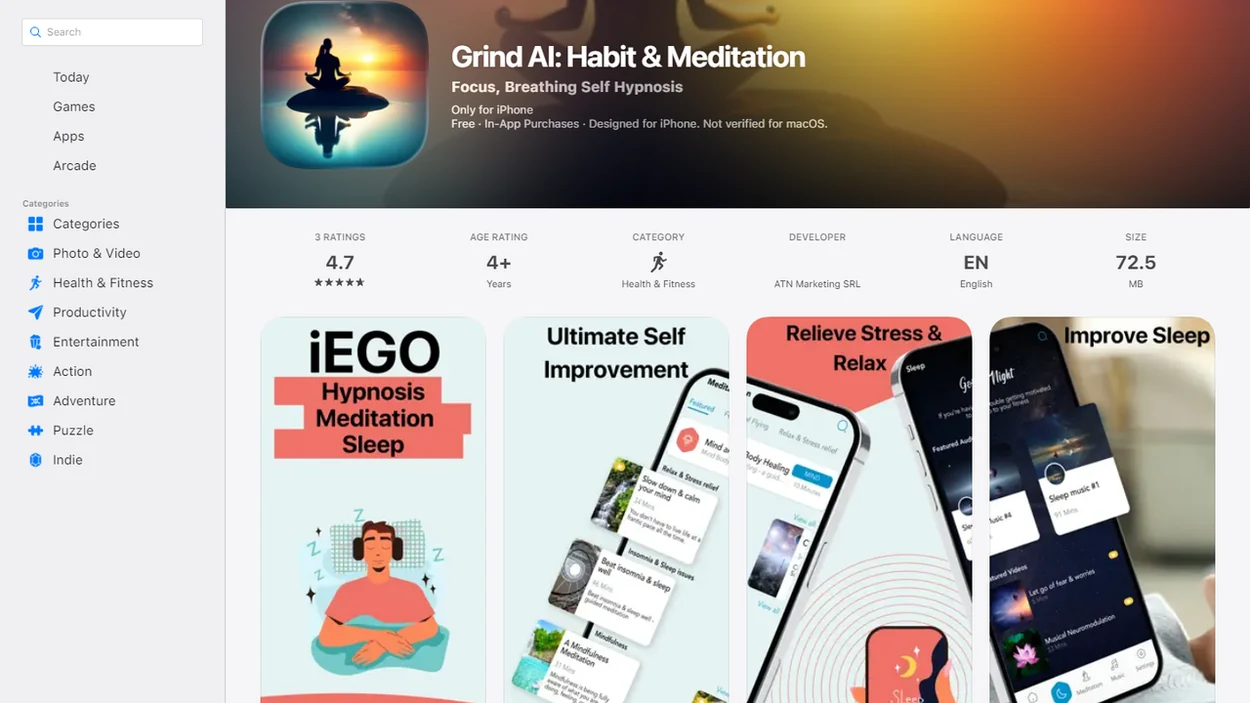
Quantum jumping meditation at a glance
Quantum jumping meditation is a visualization-heavy, manifestation-adjacent practice that asks you to imagine a wiser or more successful version of yourself. It is not evidence that you can shift timelines, enter parallel universes, or change reality through quantum physics.
A safer way to use it is as creative imagery plus grounded mindfulness. Stand still for a few breaths, perhaps with the air conditioner hum in the background, picture a future choice, then return to the room and take one small action.
Keep it ordinary.
Meditation itself is mainstream; a CDC/NCHS report found that 14.2% of U.S. adults reported using meditation in the past 12 months in 2017 CDC guidance. But mainstream meditation use does not validate every online claim attached to the word meditation. For a grounded starting point, compare it with mindfulness meditation, which trains present-moment awareness rather than alternate-self storytelling.
Five facts about quantum jumping meditation for beginners
- Quantum jumping meditation is a visualization and manifestation trend, not established quantum science. The word “quantum” sounds technical, but the practice is not applied physics.
- Typical sessions use a repeatable story arc. Many guides include relaxation, a portal or doorway, an alternate self, and imagined lessons brought back into daily life.
- There is no evidence that people literally shift timelines. A vivid session can feel meaningful without proving parallel-universe access.
- Its more grounded pieces have better support. Breathwork, guided imagery, focused attention, and relaxation overlap with practices studied in meditation research.
- Beginners should use it as creative reflection. It should not be treated as treatment, guaranteed transformation, or a replacement for steady behavior change.
One simple way to try it is to notice the mind drifting toward tomorrow’s cooking line prep, return to the breath, and ask, “What is one useful thing I can do today?”
How quantum jumping meditation works as visualization
Quantum jumping meditation works as a guided imagery exercise: you relax, imagine another version of yourself, absorb a quality or lesson, and return with an action cue. The likely mechanisms are mental imagery, expectancy, emotional rehearsal, attentional focus, and self-distancing.
In plain language, the practice gives your mind a scene to work with. You picture a version of yourself who handles a situation better, then borrow one behavior from that scene. Maybe you imagine staying calm before a hard email, then actually pause before hitting send.
That is different from proving alternate dimensions. The experience can be useful without being literal. Good mindfulness practices and meditation techniques for beginners and daily life deliver attention training and clearer next steps, not magic access to another universe.
Mindful.net, a Mindfulness Practices App, treats quantum jumping as optional visualization rather than core mindfulness training.
Quantum jumping meditation vs mindfulness meditation
Mindfulness meditation trains present-moment awareness, while quantum jumping meditation emphasizes imagined future or alternate selves. The evidence base is stronger for mindfulness-based programs than for quantum jumping claims.
| Comparison point | Quantum jumping meditation | Mindfulness meditation |
|---|---|---|
| Primary focus | Imagined alternate or future self | Present-moment awareness |
| Typical method | Portal scene, future-self meeting, symbolic insight | Breath, body sensations, sounds, thoughts |
| Evidence base | No direct randomized trials validating timeline-shifting claims | 2014 JAMA Internal Medicine meta-analysis found moderate evidence for anxiety, depression, and pain JAMA study |
| Risk profile | Can blur into reality-shifting beliefs for some people | Usually grounded, though not risk-free for everyone |
| Best use | Creative reflection and motivation | Everyday attention practice and stress education |
A 2022 JAMA Psychiatry randomized clinical trial found mindfulness-based stress reduction was noninferior to escitalopram for anxiety disorders, which is a narrower and better-supported claim than any quantum-jumping outcome JAMA study. For most beginners, mindfulness is often easier to evaluate than quantum jumping because the practice asks you to notice present experience, not confirm unseen realities.
How to use quantum jumping meditation safely
Use quantum jumping meditation safely by keeping it short, symbolic, and tied to one real-world behavior. If the imagery feels destabilizing, unreal, compulsive, or hard to come back from, stop and choose a grounding practice instead.
- Set a realistic intention. Pick one area, such as speaking honestly in a meeting or keeping a bedtime routine.
- Ground in breath and body sensations. Feel socked feet under a chair and count five slow breaths.
- Imagine a future-self scene without treating it as literal reality. Let the image be a mental rehearsal, not proof of another timeline.
- Ask for one practical behavior to try today. Choose something visible, small, and repeatable.
- Return to the room and write one small next action. Name the object nearest you, feel the floor, then jot down the action.
For beginners, a 5 to 10 minute session is enough. The full basics of short sitting practice are covered in mindfulness meditation for beginners.
Evidence-based alternatives to quantum jumping meditation
Evidence-based alternatives keep the useful parts, such as attention, relaxation, and imagery, without adding quantum claims. Guided imagery can still be useful when it is framed as imagination, rehearsal, or calming support.
- Breath awareness: Follow the breath at the nostrils or belly, then notice and return when attention drifts.
- Body scan: Move attention through the body, including small details like jaw unclenching behind closed lips.
- Loving-kindness meditation: Repeat simple phrases of goodwill toward yourself and others.
- Mindful walking: Feel each step on carpet, tile, pavement, or an office stairwell landing.
- Guided imagery: Picture a calming or values-based scene without treating it as supernatural evidence.
An NIH-funded 2010 MBSR study found reduced perceived stress and improved psychological well-being compared with a wait-list group NIH research. NCCIH lists guided imagery among relaxation techniques studied for stress, pain, and anxiety-related symptoms, while noting that evidence varies by condition and study quality NCCIH overview. Tools like Mindful.net, mindful.org, Calm, and Headspace can help you compare grounded options.
Common quantum jumping meditation misconceptions
Does quantum jumping meditation literally move you to another timeline? No. Current evidence does not show that guided visualization can transport a person into a different physical universe.
Another misconception is that “quantum” makes the method scientifically proven. In this context, the word is usually metaphorical or promotional, not a sign that the practice uses quantum mechanics. Tingles, tears, warmth, or a rush of possibility also do not prove supernatural access. Those experiences can come from relaxation, suggestion, imagery, expectation, and focused attention.
Then there is the effort problem. Visualizing success does not replace consistent real-world action. A person may imagine a calmer version of themselves, but the useful test comes later, during the calendar alert after a long meeting or the tense conversation at home.
For people comparing claims, our does meditation work guide separates evidence from overstatement.
Quantum jumping meditation image caption and practice cue
A useful image for quantum jumping meditation would show a person sitting calmly with soft doorway or light-path imagery. Avoid sci-fi multiverse graphics, floating bodies, or anything that implies literal portal travel.
Suggested caption: Quantum jumping meditation can be framed as a visualization exercise for exploring values, confidence, and one next action, not as proof of timeline shifting or clinical treatment.
Practice cue: notice the breath, picture one wiser choice, and come back to the room. One pattern we notice: if the image starts feeling too intense, it helps to open your eyes and name three ordinary things nearby.
The lamp. The wall. The floor.
If sleep is the real goal, a grounded practice like mindfulness meditation for sleep is a clearer match than alternate-reality imagery.
Limitations
Quantum jumping meditation has real limits, and they matter more than the trend language suggests.
- There are no randomized controlled trials specifically validating quantum jumping meditation.
- Claims about shifting timelines, alternate dimensions, or literal parallel selves are unsupported.
- It should not replace therapy, medical care, sleep, social support, or consistent behavior change.
- People with psychosis risk, dissociation, severe anxiety, or reality-testing concerns should avoid intense reality-shifting imagery unless guided by a clinician.
Clinicians typically recommend grounding, stable routines, and qualified mental health support when someone feels detached from reality or overwhelmed by intrusive experiences. If you want structure without fantasy framing, DBT-style present-moment skills such as DBT mindfulness exercises may be a better fit.
What Surprised Us in Practice
Quick answer: the most useful part of quantum jumping meditation may be the ordinary reflection it creates, not the claim that a person has shifted realities. One pattern we notice is that beginners often respond better when the session is short, the breath is steady, and the image of a future self is treated as a prompt rather than proof. If the visualization leaves you clearer about one next step, it may be serving as creative self-inquiry; if it makes daily life feel less real, grounding is usually the safer comparison point.
What Not to Optimize
Try one short session with one clear anchor: breathe steadily, imagine a future version of yourself for two minutes, then write down one ordinary action that person would take today. Do not optimize for intensity, tingles, vivid imagery, or a sense of certainty. A useful session is often the one that makes tomorrow’s behavior simpler, which is why Mindful.net’s Practice Decision Support at /discover-best-mindfulness-practice can be more helpful than chasing a dramatic meditation state.
When This Is Probably Not the Best Choice
- If visualization makes you feel spaced out or detached, try grounding with sound, breath, or a visible object before returning to imagery.
- If you want a practice with fewer metaphysical assumptions, the Anchor-Notice-Return loop at /what-is-mindfulness is usually a cleaner starting point.
- If you are a shift worker running on little sleep, a short breath anchor may be easier to repeat than a long future-self scenario.
- If you are an athlete, musician, or parent preparing for a specific task, use imagery only if it leads to one practical cue you can act on.
- If the practice increases rumination about whether you chose the “right timeline,” pause it and use a simpler mindfulness or grounding exercise instead.
Technique Snapshot
| Technique | Best for | Minutes |
|---|---|---|
| Quantum jumping-style visualization | Exploring goals or identity in a creative, nonliteral way | 5-12 min |
| Grounding with one sensory anchor | Feeling more oriented when imagery becomes too abstract | 3-8 min |
| Anchor-Notice-Return mindfulness | Practicing attention without needing a story or outcome | 5-15 min |
From Our Editorial Review
A field note from practice: We usually see people get more value from quantum jumping meditation when they hold it lightly. The sessions that seem most useful are not the most cinematic ones; they are the ones that turn a future-self image into one modest, repeatable behavior. When someone feels pressured to believe the timeline language literally, we usually suggest stepping back into breath, body, or another simple anchor.
Use quantum jumping as reflection, not proof; the best result is one grounded action you can repeat.
Why Mindful.net fits this specific need
Mindful.net is useful here because it can separate imaginative meditation trends from grounded attention practices without dismissing personal meaning. Readers can compare quantum jumping with mindfulness, grounding, and Practice Decision Support, then choose the simplest repeatable option for the day.
FAQ
Is quantum jumping meditation real?
The visualization experience can be real and emotionally vivid. Literal timeline shifting is not supported by evidence.
Does quantum jumping use physics?
No. In this context, “quantum” is usually metaphorical or marketing language, not applied quantum mechanics.
Can quantum jumping change my life?
It may clarify motivation, values, or goals. Lasting change depends on repeated real-world actions.
Is quantum jumping safe?
Brief creative visualization is usually low risk for many people. Intense reality-shifting imagery may be destabilizing for some.
How long should beginners practice?
Beginners can start with 5 to 10 minutes. Follow the session with grounding and one practical action.
What should I visualize?
Visualize a grounded future-self scene tied to values, habits, and one realistic next step. Avoid treating the scene as literal proof.
Is mindfulness better than quantum jumping?
Mindfulness has a stronger evidence base. Quantum jumping is better treated as optional creative imagery.
Who should avoid quantum jumping?
People with dissociation, psychosis risk, severe anxiety, or reality-testing concerns should avoid intense versions. Grounded practices and professional guidance are safer choices.