
Mindfulness and Stress Awareness: Everyday Practice, Clear Limits



Mindful health uses secular mindfulness and stress awareness to support everyday well-being, not to diagnose or treat illness. It means noticing thoughts, emotions, body sensations, and surroundings with calm, present-moment attention. The aim is to recognize stress and habitual reactions, not to suppress thoughts or force yourself to feel relaxed. This is educational self-care, not therapy, medical treatment, or emergency care.
Begin with something brief: notice your breathing, feel your feet while walking, pay attention to a few bites of food, or pause for 30 seconds between tasks. Research suggests mindfulness can support well-being, but effects vary and findings from structured programs do not guarantee results from casual practice. Persistent distress, worsening symptoms, or concerns about your physical or mental health call for professional support.
The essentials
- Mindful health is about present-moment awareness, not curing illness or suppressing thoughts.
- Beginners should start with short, safe practices such as breathing, walking, eating, or 30-second pauses.
- Mindfulness research is promising for stress and well-being, but effects vary and professional help is needed for medical or mental health concerns.
What mindful health includes, and what it does not
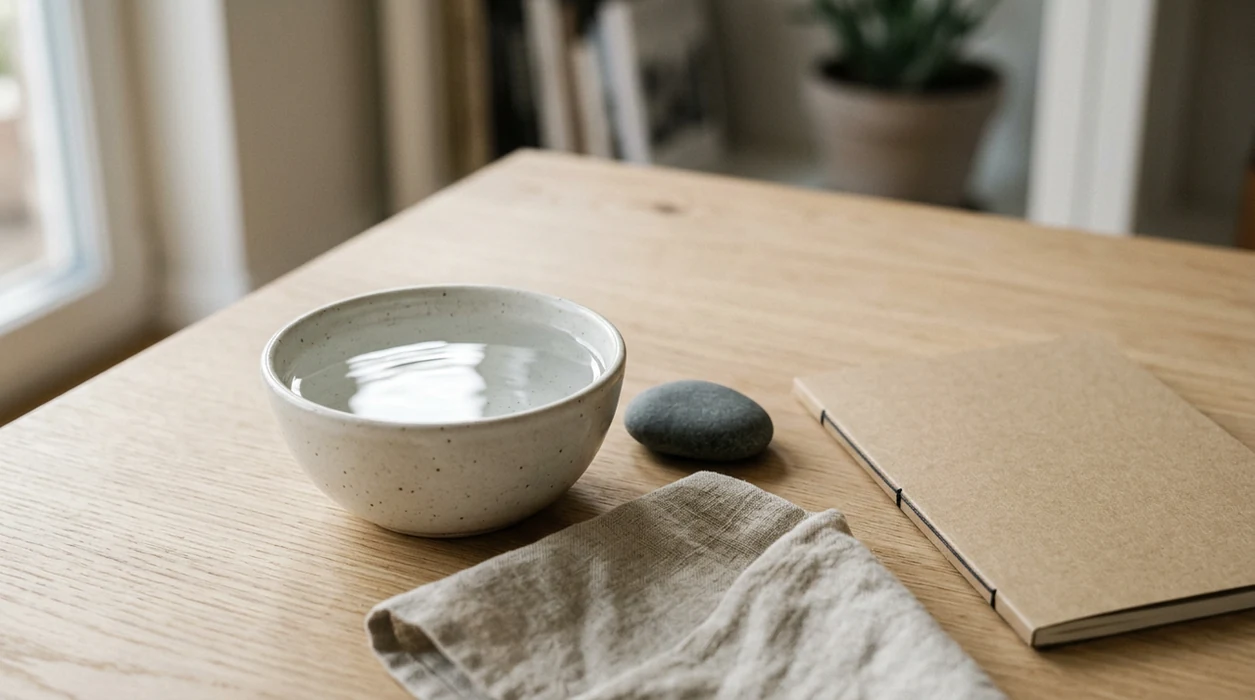
Mindful health means paying steady attention to thoughts, feelings, body sensations, and surroundings in ordinary moments. It is educational self-care, not medical advice, diagnosis, treatment, or a promise that symptoms will improve.
| At-a-glance item | Plain answer |
|---|---|
| Purpose | Build awareness of stress, habits, and daily reactions |
| Beginner time | 30 seconds to 5 minutes |
| Examples | Breathing, walking, eating, body scan, transition pause |
| Boundaries | Not therapy, diagnosis, emergency care, or treatment |
| Seek support when | Distress persists, safety is at risk, or symptoms affect daily life |
One simple way to try it is noticing your feet on carpet before answering a message. Tools like Mindful.net can help beginners compare mindfulness practices and meditation techniques for everyday life, but the practice itself stays simple: notice and return.
A 30-second pause you repeat is more useful for beginners than a 20-minute session you dread.
Five basics of attention practice and self-care
- Mindfulness means intentional attention. It is paying attention on purpose to the present moment without judging the experience as good or bad. The National Center for Complementary and Integrative Health describes mindfulness as training attention and awareness, while also noting that evidence and safety vary by practice and person NCCIH overview.
- Common practices are ordinary. Mindful breathing, body scans, mindful walking, mindful eating, and short pauses between tasks all count.
- Mindful health is supportive, not clinical care. It should not replace professional medical or mental health treatment.
- Beginners usually do better with short repetition. A phone timer set for 5 minutes is often easier than forcing a long sit. When shorter sessions feel comfortable, a 10 minute meditation for stress offers a longer option for practicing attention.
- Research is promising but uneven. Effects vary by person, teacher quality, practice type, and life context.
For beginners and daily practice, mindfulness and meditation techniques can support steadier attention and earlier recognition of stress, but they do not guarantee symptom relief or replace professional care.
Notice stress cues before reacting automatically
Mindful health works by interrupting autopilot and shifting attention toward breath, body cues, surroundings, and emotional signals. In plain terms, it helps you notice what is happening before you react automatically.
The mechanism is attention regulation, which means practicing where you place awareness and how you return when the mind wanders. You might notice ribs widening under a sweater, a tight jaw, or a grocery list appearing during a quiet minute. That noticing is the practice.
Repeated practice may support stress awareness, self-regulation, and well-being by making tension, rumination, rushed behavior, and reactivity easier to recognize. It does not mean controlling every thought. Clinicians typically recommend professional assessment for persistent or severe symptoms, medication questions, trauma concerns, or safety risks.
Body stress signals are not a cortisol test
Sleep disruption, jaw or shoulder tension, digestive upset, irritability, fatigue, and trouble concentrating can overlap with stress. They are reasons to notice a pattern, not proof that your cortisol is high or that your body is reaching a breaking point. Medical conditions, medications, and daily habits can produce similar experiences. Persistent, severe, or disabling symptoms need professional evaluation rather than a symptom checklist.
Mindfulness also cannot tell you your hormone levels. A review of 45 randomized trials on meditation and physiological stress markers found changes in several measures, including reduced cortisol associated with focused-attention practices. Those findings describe group averages across interventions. They do not establish that a brief body scan lowers your cortisol immediately, or that feeling calmer confirms a hormonal change.
How to Use Mindful Health Practices Safely
Use mindful health practices safely by starting small, staying grounded, and adapting when discomfort rises. Discomfort is useful information, not a failure.
- Choose a low-pressure moment, such as sitting on a kitchen chair or pausing before opening your laptop.
- Set a short timer for 30 seconds to 5 minutes, especially if you are new to mindfulness meditation for beginners.
- Notice one anchor, such as breathing, sounds in the room, or the feeling of tile under your feet.
- Name distractions gently, using words like “thinking,” “planning,” or “worrying.” For a brief verbal reminder, stress quotations can offer grounding words without asking you to suppress difficult feelings.
- Return to the activity without trying to make the mind blank.
- Stop or adapt if distress increases, using eyes-open grounding, mindful walking, or support from a trained professional.
If inward focus feels too intense, keep your eyes open and name five neutral objects nearby. If you are considering other approaches, guided hypnosis for anxiety explains possible uses and limits without replacing professional support.
Short practices for meetings, meals, and daily transitions
Beginner-friendly mindful health practices are short, secular, and easy to place inside normal routines. The goal is attention practice, not a special mood.
- 60-second breathing: Use it before a meeting or after a tense message. Notice one inhale, one exhale, and the next natural pause.
- Mindful walking: Try it in a hallway, parking lot, or office stairwell. Feel weight shift from heel to toe.
- Mindful eating: Use the first three bites of lunch. Notice texture, temperature, chewing, and the urge to rush.
- Body scan: Use it in bed or on a chair. Notice tight calves against the mattress, then move attention slowly upward.
- Transition pause: Use it between tasks. Let the door handle touched before entering become a cue to arrive.
For children and families, mindfulness for kids uses shorter cues and simpler language.
Turn a week of stress awareness into one practical change
For one week, make a brief note when stress rises: the trigger, body sensation, automatic thought, action, and result. Keep the description concrete, such as “Monday meeting, tight jaw, thought I would fall behind, checked messages through lunch.” This is a practical reflection format, not a diagnostic test or a separately validated treatment. Its purpose is to help you choose a response rather than simply collect symptoms. For another reflection approach, Stoicism for stress management explores how daily choices and perspective can support a calmer response.
Next, separate what you can control, influence, or cannot change today. You might prepare Monday’s first task, ask a manager to clarify priorities, and acknowledge that a colleague’s reaction is outside your control. Work-related stress was a significant burden for 69% of employed adults in APA’s 2025 Stress in America report. A short practice can support your response, but it cannot remove excessive workload, financial pressure, or unsafe conditions. The Four As of stress management can help organize practical responses to pressures you can change or approach differently.
What structured mindfulness studies show
Mindfulness research suggests benefits in some structured settings, but it should not be stretched into broad medical promises. A 2014 JAMA Internal Medicine meta-analysis of 47 randomized trials found moderate improvements in anxiety, depression, and pain compared with usual care in studied populations JAMA study.
A 2018 workplace systematic review reported small to moderate reductions in stress and improvements in well-being across 23 randomized controlled trials NIH research. These findings came from structured clinical or workplace programs, not casual practice squeezed between emails.
Research on mindfulness usually applies best when the practice is structured, repeated, and appropriately supported, while occasional self-guided use fits general awareness more than clinical change. For a broader research discussion, our guide on does meditation work separates evidence from overclaiming.
Mindful Health Boundaries for Medical and Mental Health Care
Does mindful health diagnose, treat, prevent, or cure medical or mental health conditions? No. Mindful health content is educational and supportive only.
Contact a licensed professional for persistent distress, worsening symptoms, medication questions, trauma concerns, pain, sleep problems, panic, or any health condition that affects daily life. If you have suicidal thoughts, self-harm urges, psychosis, severe panic, or a medical emergency, seek immediate professional or emergency help. In the U.S., the 988 Suicide & Crisis Lifeline provides 24/7 crisis support by call, text, or chat Reference. Do not rely on breathing practice during a crisis.
Use mindfulness as a daily-life skill only when it feels safe and appropriate. A short practice can help you notice stale office air during an exhale, but it cannot judge risk, provide treatment, or replace a trained clinician. For sleep-specific education, mindfulness meditation for sleep should still be used with the same care boundaries. For more context on safe practice, stress, sleep and mindfulness safety explains care boundaries when stress affects rest.
Image guidance: An ordinary pause, not a medical intervention
Suggested image caption: A beginner takes a quiet mindful pause during an ordinary day, noticing breath and surroundings without trying to diagnose or fix stress.
Recommended alt text: A person practicing mindful health by sitting near a window and noticing breath, posture, and surroundings during a quiet daily pause.
The image should feel ordinary, not clinical. A person walking outside, sitting near a window, pausing during a commute, or taking a quiet break after lunch fits the topic better than therapy rooms, medical equipment, spiritual authority figures, or dramatic before-and-after imagery.
Keep the scene modest. Headphones resting on a meditation cushion can work if the frame suggests practice, not cure. Apps such as Mindful.net, Headspace, and Calm can support guided practice, but the image should show everyday awareness rather than a product claim.
Mindfulness Limits for Stress
- Seek urgent professional help for suicidal thoughts, self harm urges, psychosis, severe panic, or medical emergencies, rather than relying on mindfulness.
- Research is promising but evolving, and benefits may be modest, inconsistent, or absent for some people.
- If mindfulness causes tension, numbness, or agitation, try grounding with eyes open or stop for the day.
- Inconsistent practice may limit lasting benefits, and meditation frequency matters more than chasing long sessions too soon.
Mindfulness and stress awareness questions
What is mindful health, and is it medical care?
Mindful health means using secular attention practices to notice thoughts, feelings, body sensations, and everyday reactions. It is supportive self-care, not diagnosis, therapy, medical treatment, or emergency care. You can use it alongside professional care, but it should not replace assessment for persistent distress or symptoms that affect daily life.
Can mindfulness help me notice stress sooner?
Mindfulness gives you a way to pay attention to cues such as a tight jaw, racing thoughts, or the urge to rush. Recognizing those cues may create a pause before an automatic reaction. The goal is earlier awareness, not guaranteed calm, symptom relief, or proof that a sensation is caused by stress.
How long should a beginner practice mindfulness for stress?
Start with 30 seconds to five minutes in a manageable moment, such as before opening your laptop or during a quiet break. Notice one anchor, including sounds or the feeling of your feet. Short practice is a starting point, not a treatment dose, and longer sessions are not necessary to begin learning attention skills.
Can mindfulness fix stress caused by work or money problems?
A short practice may help you respond with less immediate reactivity, but it cannot remove debt, insecure employment, or an excessive workload. Pair awareness with a concrete step, such as a budget conversation, a request to clarify priorities, or practical support. Acceptance of feelings does not mean accepting unsafe or abusive conditions.
When should I seek professional help instead of managing stress alone?
Seek professional assessment when distress persists, symptoms worsen, or sleep, pain, panic, or exhaustion interfere with daily life. Medication questions and trauma concerns also deserve qualified guidance. Suicidal thoughts, self-harm urges, psychosis, or a medical emergency require immediate professional or emergency help, not a mindfulness exercise.
Can mindfulness help people living with chronic pain?
Mindfulness may help people with chronic pain manage distress and improve coping, even when pain itself does not change much. Practices can involve gently noticing sensations, emotions, and tension without judging them. Keep activities within your comfort level, and use mindfulness alongside medical guidance rather than instead of pain treatment.