
Meditation in the Bible: Contemplative Practice in Context
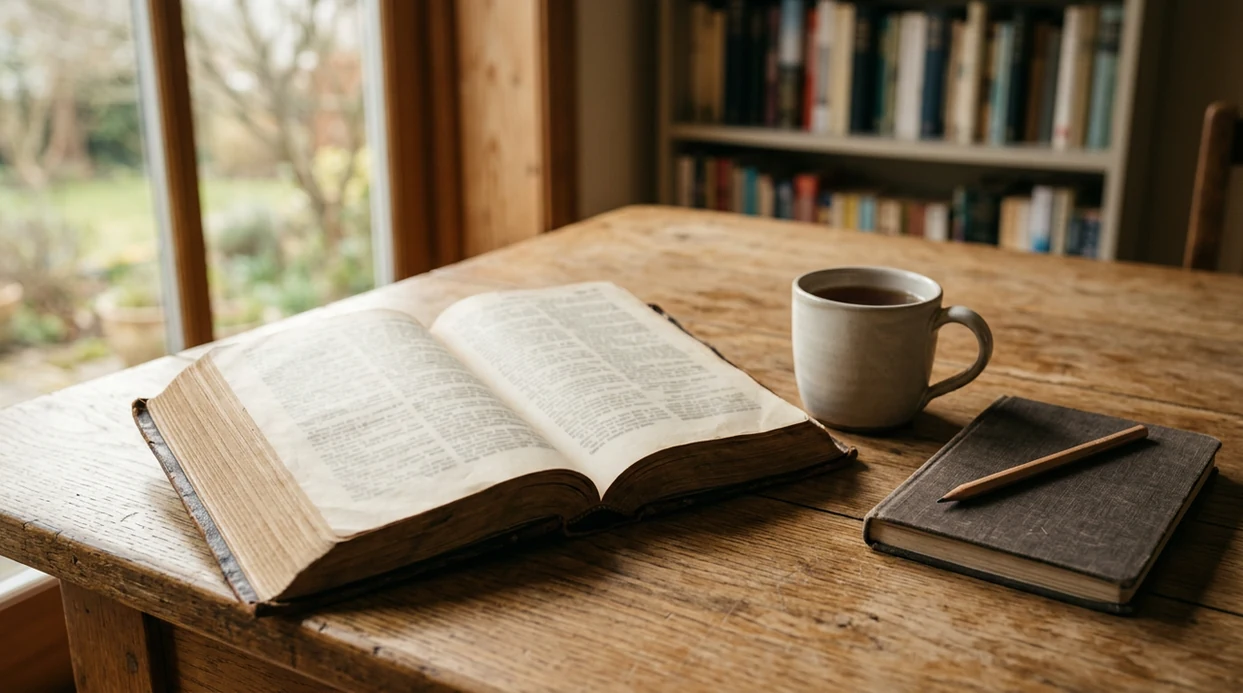
Meditation in the Bible means focused reflection on God, Scripture, and daily life, usually through slow reading, repetition, memory, and prayer. It is closer to attentive contemplation than to emptying the mind, and it can be compared with secular mindfulness without treating them as identical.
> Definition: Biblical meditation is a text-centered contemplative practice that uses attention, memory, repetition, and prayer to dwell on Scripture and apply it to life.
- Biblical meditation usually means slowly pondering Scripture, not blanking the mind.
- Key passages include Joshua 1:8 and Psalm 1, where meditation is described as a regular practice tied to wisdom and faithful living.
- Secular mindfulness and biblical meditation can share attention skills, but they differ in purpose, language, and theological focus.
Meditation in the Bible at a Glance
Meditation in the Bible is focused reflection on God and Scripture, often through slow reading, repetition, prayer, and life application. It is not mainly a technique for making the mind blank.
A beginner might sit with one Psalm line for five minutes, repeat it quietly, notice a word that stands out, and turn that notice into prayer. The practice is devotional, but it also uses ordinary attention skills: staying, noticing, returning, and remembering.
Not dramatic. Often very plain.
This guide explains the practice neutrally. Religious readers can place it inside prayer and worship. Secular readers can study it historically, as one form of contemplative reading, without adopting its beliefs.
Five Facts About Meditation in the Bible
- Biblical meditation focuses on God, Scripture, and faithful living rather than on emptying the mind or looking only inward.
- Joshua 1:8 and Psalm 1 explicitly describe meditation on God’s law as a regular practice, often framed as “day and night.”
- The practice often includes repetition, memory, and quiet vocal recitation; some Hebrew language nuance points toward murmuring or low repeated speech.
- Biblical meditation is devotional rather than purely academic Bible study, though it should still respect context and meaning.
- Modern health claims should be cautious because research on meditation rarely isolates biblical meditation from mindfulness, mantra practice, prayer, or other forms.
For beginners, biblical meditation is usually easier to understand as slow attention to a short text than as a special mental state. The notebook stays open after practice, not to grade the session, but to catch one concrete next step.
Biblical Meditation Practice Mechanics
Biblical meditation works as an attention loop: read, repeat, notice, pray, and apply. That loop uses memory, imagination, moral reflection, and prayer to keep a biblical text present long enough to shape thought and action.
In some biblical contexts, the word translated “meditate” can suggest muttering, murmuring, or low repeated speech. That matters because the practice may have sounded like quiet recitation, not only silent thinking. For example, the Hebrew verb often transliterated as hāgâ can carry senses such as murmuring, uttering, musing, or meditating in standard lexicon summaries 0 1. A person might repeat a verse under their breath, hear its rhythm, and notice where it presses on ordinary life.
The Bible does not give one universal modern manual. It offers commands, examples, songs, and wisdom language that later communities have practiced in different ways. Good mindfulness practices and meditation techniques for beginners and daily life deliver steadier attention and practical reflection, not a guaranteed cure or a replacement for faith, therapy, or community.
Biblical Meditation and Secular Mindfulness Compared
Biblical meditation and secular mindfulness both train attention, but they usually differ in object, aim, and language. One centers on Scripture and God; the other often centers on present-moment experience.
| Category | Biblical meditation | Secular mindfulness |
|---|---|---|
| Object of attention | Scripture, God’s works, God’s character | Breath, body, sound, thoughts, feelings |
| Common aim | Relationship, obedience, wisdom, transformation | Awareness, steadiness, stress reduction |
| Method | Slow reading, repetition, prayer, application | Noticing, returning, labeling, observing |
| Language | Devotional and theological | Secular, clinical, or educational |
| Shared skills | Attention, repetition, patience, non-rushed awareness | Attention, repetition, patience, non-rushed awareness |
For secular practice, mindfulness meditation often starts with the breath or body because those anchors are easy to find. Biblical meditation usually starts with a phrase, image, command, promise, or story.
The object changes the practice.
Beginner Steps for Meditation in the Bible
How to use meditation in the Bible as a beginner: choose a short passage, stay with it slowly, respond honestly, and carry one action into the day. Secular readers can follow these steps as historical study rather than devotional practice.
- Choose a brief passage, such as one Psalm verse or a short Gospel saying.
- Read the surrounding context so the line is not pulled away from its meaning.
- Repeat the phrase slowly, aloud or silently, and notice which words hold your attention.
- Reflect on what the passage shows about God, human life, wisdom, or conduct.
- Respond in prayer if that fits your faith practice, using plain words rather than polished language.
- Choose one next action, such as apologizing, resting, giving thanks, or changing a small habit.
A phone timer set for 5 minutes is enough. If your mind wanders to a grocery list, notice it and return. Readers comparing faith-based practice with mindfulness meditation for beginners may find the same attention skill, but a different center.
Common Bible Passages About Meditation
Several biblical passages are closely associated with meditation, especially Joshua 1:8 and Psalm 1. Translations may use words such as meditate, ponder, muse, remember, or think on.
Joshua 1:8: This verse speaks of meditating on the law day and night, connecting repeated attention with faithful action.
Psalm 1: The blessed person delights in the law of the Lord and meditates on it day and night.
Psalm 77: The psalmist remembers and meditates on God’s deeds during distress, which gives the practice an honest emotional setting.
Psalm 119: This long Psalm repeatedly mentions meditating on God’s precepts, statutes, and ways.
Psalm 143: The writer meditates on God’s works and stretches toward God in need.
None of these passages requires a denominational script. They show a pattern: attention, remembrance, speech, desire, and response.
Modern Interest in Meditation in the Bible and Prayer
Modern readers compare biblical meditation with prayer and mindfulness because all three involve attention, repetition, and meaning-making. The overlap is real, but the traditions are not identical.
Pew reported that 55% of U.S. adults said they pray at least once a day in the 2014 Religious Landscape Study Importance Of Religion. Pew also found that 36% of U.S. adults say they meditate at least once a week. The NIH reports that about 14.2% of U.S. adults used some form of meditation in the past 12 months NCCIH overview.
Pew Research Center has reported cross-national associations between active religious practice and higher self-reported happiness, but those findings are observational and do not prove that prayer or meditation causes happiness Religions Relationship To Happiness Civic Engagement And Hea.
Mindful.net is a mindfulness app that teaches mindfulness practices and meditation techniques for beginners and everyday life. Tools like Mindful.net can help readers compare secular attention practice with religious contemplation without flattening the differences.
Limitations
Meditation in the Bible should be explained with care because ancient texts, modern practice, and health research do not line up neatly. The practice has value for many readers, but it should not be oversold.
- The Bible does not provide one complete modern how-to manual for meditation.
- Modern step lists are partly interpretive reconstructions from biblical language, tradition, and practice.
- Research on meditation rarely separates biblical meditation from mindfulness, mantra meditation, prayer, or relaxation.
- Biblical meditation should not be presented as a treatment for trauma, anxiety, depression, or other health conditions.
Clinicians typically recommend evidence-based care for mental health conditions, with meditation used only as an optional support when appropriate. For research-focused readers, our does meditation work guide separates general meditation evidence from stronger claims.
Signs You Should Try Another Approach
- If biblical phrases start becoming mental noise rather than a clear anchor, shorten the session and return to one line, one steady breath, or one simple prayer.
- If the practice turns into self-criticism about being a “bad Christian” or “bad meditator,” a gentler prayer walk or conversation with a trusted spiritual leader may fit better.
- If stillness feels agitating after several tries, Mindful Walking may offer a more workable bridge because attention can rest on movement instead of forced quiet.
- If you are using meditation to avoid a hard decision, relationship repair, or practical responsibility, reflection may need to be paired with action rather than more inward focus.
- If yoga language feels confusing in a biblical context, separate the categories: yoga is usually body-posture centered, while biblical meditation is usually Scripture- and prayer-centered.
A Decision Shortcut
For most beginners, a short session is enough to learn whether biblical meditation feels clarifying, neutral, or frustrating. Try three to seven minutes with one clear anchor, such as a Psalm phrase, a Gospel sentence, or a repeated prayer, before deciding whether to lengthen it. Consistency tends to matter more than session length for most beginners.
One Mistake We Notice Often
In our editorial review, many readers seem to get stuck when they try to prove they are calm, devout, or doing meditation correctly. We usually suggest lowering the performance pressure: choose one line, keep a steady breath, and let the session be modest. The best practice is usually the one you will repeat tomorrow.
Decision support beats generic calm advice when choosing between biblical meditation, mindfulness, yoga, or prayer.
Which Technique Fits This Situation
- A nurse coming off a night shift may need a quiet verse and steady breath more than a long study session; fatigue changes what attention can realistically hold.
- A parent interrupted every few minutes may do better with repeated one-line reflection than with a silent 20-minute plan that rarely happens.
- A musician may connect with biblical meditation through rhythm, repetition, and memory, while an athlete may prefer a walking prayer after training.
- Some advice emphasizes emptying the mind, while biblical meditation usually emphasizes filling attention with God, Scripture, and faithful response.
- Workplace stress advice may point toward secular grounding; Mindfulness at Work can be useful, but it should not be treated as identical to prayerful Scripture meditation.
A Quick Technique Map
| Technique | Best for | Minutes |
|---|---|---|
| One-verse reflection | readers who want Scripture as the main anchor | 3-10 min |
| Prayerful walking | restless beginners, shift workers, or people who focus better with movement | 5-15 min |
| Slow recollection at day’s end | parents, caregivers, or students reviewing the day with gratitude and honesty | 5-12 min |
Why Mindful.net fits this specific need
Mindful.net can help readers compare contemplative options without collapsing them into one category. This page sits well beside practical guides like Mindful Walking and Mindfulness at Work, especially for people deciding whether they need Scripture reflection, movement, workplace grounding, or a different support path.
FAQ
Is meditation in the Bible allowed?
Yes. Biblical texts describe meditation positively when it is centered on God, Scripture, wisdom, and faithful reflection.
What is biblical meditation?
Biblical meditation is slow, attentive reflection on Scripture. It often includes repetition, memory, prayer, and one concrete life application.
Where is meditation in the Bible?
Joshua 1:8 and Psalm 1 are core passages. Other Psalms describe meditating on God’s words, works, law, and character.
Is meditation the same as prayer?
Meditation and prayer overlap, but they are not identical. Meditation dwells on a text or truth, while prayer responds to God.
Did Jesus practice meditation?
The Gospels show Jesus praying, withdrawing in solitude, and quoting Scripture. They do not present a modern step-by-step meditation method.
Is mindfulness biblical?
Mindfulness can share attention skills with biblical practice. Biblical meditation differs because its focus is God, Scripture, and faithful response.
How do Christians meditate?
Christians often choose a passage, read slowly, repeat key words, reflect, pray, and apply one next step. Some may use tools such as Mindful.net for secular attention practice alongside separate faith practices.
Can meditation replace Bible study?
No. Meditation can complement Bible study, but it does not replace context, interpretation, teaching, or community learning.