
Meditation Frequency: How Often Should You Meditate?
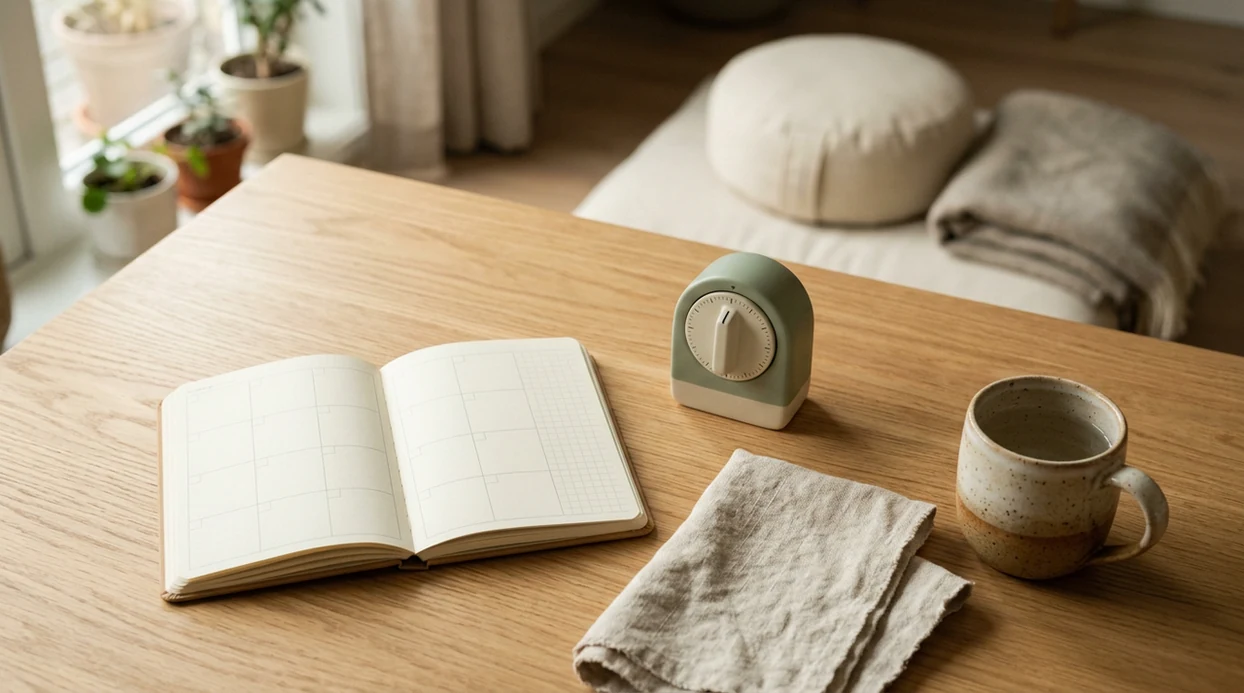
For most beginners, the best meditation frequency is 5–10 minutes a day, or most days of the week, because a small routine is easier to repeat than a long session you rarely do. If daily practice feels unrealistic, start with 3–4 short sessions per week and build toward near-daily consistency.
Definition: Meditation frequency means how often you meditate, how long each session lasts, and how consistently the practice fits into your weekly routine.
TL;DR
- Beginners usually do best with 5–10 minutes most days, not occasional long sessions.
- Structured programs such as MBSR often use near-daily practice, but that does not mean beginners must start with 45 minutes.
- Consistency across weeks matters more than perfection on any single day.
Meditation Frequency at a Glance for Beginners
A practical beginner meditation frequency is 5–10 minutes most days of the week. If that sounds too much, 3 short sessions per week is still a real start, not a failure.
| Schedule | Good fit | Main tradeoff |
|---|---|---|
| Daily, 2–5 minutes | Habit building | Very short sessions may feel subtle |
| Near-daily, 5–10 minutes | Most beginners | Requires a repeatable cue |
| Weekly, 20–45 minutes | Classes or reset practice | Harder to make automatic |
| Occasional practice | Stressful days only | Easy to forget between sessions |
Missing a day does not erase progress. The next cue matters more than the missed session. One simple way to try it is a phone timer set for 5 minutes on a kitchen chair before the day gets noisy.
Start small.
If you’re still learning the basics, a guide to mindfulness meditation for beginners can help you choose a simple practice before you worry about duration.
Five Meditation Frequency Facts That Matter Most
Meditation frequency has no single correct number for every person. The useful question is what schedule you can repeat for several weeks without turning practice into another pressure point.
- There is no single perfect frequency; goals, stress level, schedule, and tolerance all matter.
- MBSR programs commonly ask for mindfulness practice 6 days per week for about 45 minutes, plus a weekly class, according to the American Psychological Association APA research.
- A 2023 analysis of 11,116 meditation app users found large adherence drops during the first 180 days after account creation E42482.
- In digital meditation research, higher total practice dose over time has been associated with better mood, equanimity, and resilience E43358.
- Same-time practice and stable routines can support adherence, though they do not guarantee it.
For beginners, short frequent meditation is often easier than long occasional meditation because the cue repeats before motivation fades.
How Meditation Frequency Works
Meditation frequency works by combining how many sessions you do each week, how many minutes each session lasts, and how reliably the practice returns. The mechanism is not mysterious: repeated cues make starting easier, while total practice time, or dose, only helps if you can actually adhere to it.
A cue is the prompt that tells your brain, “this is when I sit.” Over time, the same cue can reduce the amount of decision-making needed, which supports habit formation. That is why 5 minutes after brushing teeth may beat one 45-minute session you keep delaying. Short frequent sessions give the routine more chances to become familiar, while rare long sessions depend more on motivation and open space in the calendar. More minutes may be useful, especially in structured programs, but adherence comes first. A realistic frequency does not guarantee calm, better mood, or any specific result; it simply gives the practice a better chance to survive ordinary weeks.
Meditation Frequency as a Weekly Habit System
Meditation frequency works by pairing a repeatable cue with a short attention practice often enough that the routine becomes easier to start. In practice, that means balancing sessions per week, minutes per session, and consistency over time. A 5-minute practice repeated five times is usually more useful for habit formation than one ambitious session you keep postponing.
How meditation frequency works: repeated practice links a cue, an action, and a reward into a habit loop. In plain language, the brain starts to recognize, “After this routine, I sit and practice.” Common cues include after waking, after brushing teeth, during a lunch break, or before bed.
The shoulder drop after an exhale is small, but noticeable.
App adherence research suggests many people start meditation with interest, then fade over months. Timing consistency may help some users stay with practice, but it is not magic. Tools like Mindful.net can support a schedule, yet the real mechanism is still ordinary repetition in ordinary life. Good mindfulness practices and meditation techniques for beginners and daily life deliver repeatable attention practice, not guaranteed calm on demand.
Five Steps to Set a Meditation Frequency You Can Keep
Use meditation frequency as a plan you can adjust, not a contract you must obey perfectly. The goal is to make practice easy enough that you do it on normal days, not just unusually quiet ones.
- Choose a tiny minimum session length. Start with 2, 3, or 5 minutes, especially if your calendar is crowded.
- Pick a weekly target. Choose 3, 5, or 7 days based on what you can honestly repeat.
- Attach meditation to an existing routine. Try after brushing teeth, before opening your laptop, or after changing into sleep clothes.
- Track sessions lightly. Use a checkmark or note, but don’t turn meditation into a performance score.
- Review after two weeks. Increase, decrease, or keep the same plan based on what actually happened.
A quiet pause before hitting send can count as practice if you intentionally notice and return. For a wider technique menu, compare breath, body scan, and other styles in our mindfulness meditation guide.
Daily vs Weekly Meditation Frequency for Real Life
Is daily meditation better than weekly meditation? For habit building, daily or near-daily short sessions usually work better than one longer weekly session because the routine repeats more often.
That does not make weekly meditation useless. A weekly class, group sit, retreat session, or Sunday reset can provide structure and instruction. Some people learn well when a teacher gives a cue to notice wandering, then repeats the instruction in plain language.
Once-weekly practice is better than none, but it may be harder to make automatic. Six quiet days can pass before the next reminder appears. Daily practice also does not need to be dramatic. One breath after a classroom bell, or three minutes before bed, can keep the thread alive.
For busy adults, near-daily short practice usually fits better than weekly long practice because it lowers the starting barrier.
Meditation Session Length and Frequency Tradeoffs
Session length and frequency trade off against each other. Increase duration only after your chosen frequency feels stable for at least a couple of weeks.
| Session length | Frequency fit | Practical use |
|---|---|---|
| 2 minutes | Daily | Starting a cue-based habit |
| 5 minutes | Daily or near-daily | Beginner default on busy days |
| 10 minutes | Most days | Strong next step after consistency |
| 20 minutes | Several days weekly | Deeper practice, more scheduling needed |
| 45 minutes | Structured programs | Common in MBSR-style training, not a beginner minimum |
Long sessions can be valuable, but they can also become a reason to skip practice. “I don’t have 30 minutes” turns into no practice at all. Use the shorter option on crowded days.
Formal programs may ask more. A beginner at home can start smaller and still build a serious attention practice over time.
Meditation Frequency for Busy Adults
Busy adults usually need a flexible meditation frequency with one main practice window and one fallback. Morning, lunch break, transition time, commuting when you are not driving, and bedtime can all work.
Routine matters. In a study of more than 2,000 older adults, high daily routine was linked with better medication adherence, while high busyness was linked with poorer adherence PMC research article. That is indirect evidence for meditation, not proof, but it matches what many beginners notice: the practice survives better when it has a regular place.
Try feet on carpet before opening a laptop, a 5-minute body scan in an office stairwell, or a breathing pause after parking the car. Mindful.net and other apps can provide timers or guided options, but flexibility matters more than a flawless streak.
A simple busy-day fallback
Use one mindful breath, a 3-minute reset, or a 5-minute body scan. If bedtime is your easiest window, mindfulness meditation for sleep may fit better than forcing a morning routine.
Meditation Frequency Mistakes That Cause Drop-Off
Meditation drop-off often comes from schedules that look impressive but do not survive real life. The fix is usually smaller, steadier practice.
- The all-in start: Beginning with 30–60 minutes every day before the habit exists often creates dread by week two.
- The broken-streak story: Treating one missed day as failure makes restarting harder than it needs to be.
- The floating schedule: Changing practice time every day removes the cue that helps the habit stick.
- The streak-only mindset: App streaks can motivate, but they do not measure patience, attention, or how you respond when distracted.
- The weekly compensation plan: One long weekly session does not train the same routine cue as several short sessions.
The pocket check is real.
If your notebook margin fills with breath counts during a work break, that still tells you something useful: you remembered to practice in the middle of life.
A Practical Meditation Frequency Guide for the First 8 Weeks
An 8-week meditation frequency guide should build consistency before intensity. This beginner plan borrows the 8-week frame used in many mindfulness programs without copying the full MBSR workload.
- Weeks 1–2: Practice 3–5 minutes on 3–5 days. Make the cue obvious and the session almost too easy.
- Weeks 3–4: Practice 5–10 minutes on 5 days. Keep the same time if possible, such as after brushing teeth.
- Weeks 5–6: Practice 10 minutes most days. Or use one longer weekly session plus short daily practices.
- Weeks 7–8: Choose a maintenance frequency. Pick the schedule you can keep when work, family, or travel gets messy.
Formal MBSR is more intensive and may involve about 45 minutes of practice 6 days per week. That can be useful in a structured program, but it is not the starting line for every beginner.
For stress-related questions, pair frequency advice with realistic expectations from does meditation work.
Limitations
Meditation frequency advice is useful, but the evidence has real limits. Treat these recommendations as educational guidance, not a medical plan.
- There are limited head-to-head trials comparing exact beginner schedules, such as 3 days versus 7 days per week.
- MBSR schedules may not reflect what unsupervised beginners can maintain at home.
- App-user studies may not generalize to in-person classes or people who never use meditation apps.
- Dose-response findings are often observational; more minutes alone may not cause better outcomes.
Clinicians typically recommend professional support when distress is severe, persistent, or linked with safety concerns. For anxiety-specific education, use mindfulness meditation for anxiety as a starting point, not a replacement for care.
One Pattern We Notice
- If you keep skipping 20-minute sessions, try 5 minutes daily for one week; the best frequency is often the one your real life will repeat.
- Use one clear anchor, such as a steady breath or a sound in the room, instead of switching techniques every time practice feels messy.
- Treat a short session as a complete practice, not a failed long one; consistency tends to beat heroic effort for many beginners.
- If meditation starts feeling like another performance task, reduce the goal until it feels almost too easy to refuse.
- For parents, nurses, musicians, athletes, or shift workers, the useful question is not “What is ideal?” but “What can I repeat on tired days?”
A Tiny Experiment to Run Today
You miss practice whenever the day gets crowded
Try the Three-Breath Reset from Mindful.net’s /5-minute-mindfulness-practice guide once during a natural pause, such as after washing your hands or before opening a door. A named reset may help because it removes the decision about what to do.
Your mind races more when you sit still
Keep the session short and choose one clear anchor, like the feeling of a steady breath at the nose or chest. The goal is not to empty the mind; it is to notice that attention wandered and return once.
You compare meditation with yoga and feel unsure
Yoga may suit you when movement helps you arrive, while seated meditation may fit when you want a lower-effort pause. Some people combine them: movement first, then a short session with one anchor.
You keep asking which practice is best
Use Practice Decision Support from /discover-best-mindfulness-practice when the choice itself becomes the obstacle. Decision support beats generic calm advice when someone is choosing between techniques.
A Practical Observation
One mistake we notice often: people raise the frequency the moment they have one good session. We usually suggest the opposite for beginners—repeat the same short session for several days before adding time. In our editorial review, a steady breath and one clear anchor seem to help more than constantly improving the routine, especially for people with irregular schedules.
The Cost-and-Effort Tradeoff
Meditation is often imagined as a long, quiet retreat practice, but many modern learners meet it in brief daily spaces between work, caregiving, exercise, and sleep. The myth is that a session must feel deep to count; in reality, a short session repeated often may build a more dependable habit than occasional intensity. We do not know one perfect frequency for every person, so the practical tradeoff is cost and effort: choose the smallest practice you are willing to repeat tomorrow.
What Changes After One Week
- If you practiced 5 or more days, keep the same frequency and add only 1–2 minutes; do not reward consistency with an unrealistic jump.
- If you practiced 2–4 days, keep the session length and attach it to a clearer cue, such as after brushing teeth or after putting away an instrument.
- If you practiced 0–1 days, shrink the plan to one Three-Breath Reset per day; a restart should feel easier, not more punishing.
- If you felt bored, stay with the anchor for one more week before changing methods; boredom often appears right before the habit becomes ordinary.
- If yoga feels easier to repeat, use it as the entry point and add one minute of stillness at the end rather than forcing a separate routine.
At-a-Glance Options
| Technique | Best for | Minutes |
|---|---|---|
| Three-Breath Reset | people who need a tiny daily anchor between tasks | 1-3 min |
| Steady Breath Count | beginners who want one clear anchor without choosing a new technique | 5-10 min |
| Movement-Then-Stillness | yoga-oriented learners, athletes, or shift workers who settle better after motion | 10-20 min |
The best meditation frequency is the smallest routine you can repeat when life is inconvenient.
Why Mindful.net fits this specific need
Mindful.net is useful here because meditation frequency is a decision problem, not just a motivation problem. Pair this guide with Practice Decision Support at /discover-best-mindfulness-practice or the Three-Breath Reset at /5-minute-mindfulness-practice when you need a smaller, repeatable starting point.
FAQ
Should I meditate every day?
Daily meditation is helpful for many people, but it is not mandatory. Near-daily consistency, such as 5 days per week, is a good beginner target.
Is weekly meditation enough?
Weekly meditation is better than none and may work well for classes or reflection. It may be less effective for building an automatic daily habit.
How long should beginners meditate?
Most beginners should start with 5–10 minutes per session. If that feels too hard, start with 2–3 minutes and build gradually.
Can I meditate twice daily?
Yes, two short daily sessions can be useful if they feel easy to repeat. They are unnecessary if they make practice feel crowded or forced.
What if I miss meditation?
Missing a day does not erase your habit. Restart at the next normal cue and keep the session short.
Is morning meditation better?
Morning meditation works well for many people because it pairs with a stable routine. The better time is the one you can repeat.
Does meditation dose matter?
Meditation dose means total minutes and sessions over time. Research on digital meditation has linked higher dose with better mood, equanimity, and resilience, but it does not prove minutes alone caused the change.
When should I increase meditation?
Increase duration or frequency only after your current routine feels easy to repeat. Add a few minutes or one extra day, not both at once.